There is a moment every serious jewellery reseller reaches: your customers love your curation, your boutique has a distinct identity, and the next logical step is jewelry that carries your name — not your supplier’s.
Private label and OEM jewelry production is how that step happens. And Thailand, with Bangkok at its centre, is where the world’s most discerning jewelry brands come to make it a reality.
At Hong Factory, we have been producing OEM jewelry and private label jewelry for international brands, boutiques, and retailers since 1971. This guide explains how the process works, what it costs, what you can customise, and how to determine whether OEM or private label production is the right move for your business right now.
OEM vs. Private Label: What Is the Difference?
The terms are often used interchangeably, but they describe two distinct arrangements. Understanding the difference helps you choose the model that fits your business goals.
OEM Jewelry (Original Equipment Manufacturer)
In an OEM arrangement, the manufacturer — Hong Factory — produces jewelry to the buyer’s specifications. The buyer may provide their own designs, their own technical drawings, or detailed briefs from which our design team develops production-ready artwork. The resulting pieces are manufactured exclusively for that buyer and typically carry the buyer’s branding.
OEM is the right model when you have a clear design vision and want pieces that are genuinely yours — not available anywhere else, not recognisable as a manufacturer’s standard catalogue item. Fashion labels, premium boutique chains, and jewelry designers who want to scale production without building their own manufacturing infrastructure typically work on an OEM basis.
Private Label Jewelry
In a private label arrangement, the buyer selects designs from the manufacturer’s existing catalogue and has those designs produced with their own branding applied — packaging, labelling, hang tags, certificates of authenticity. The underlying designs may also be sold by other buyers, but the branding presentation makes the product distinctively yours at retail.
Private label is the right model when you want to move quickly, keep development costs low, and leverage proven designs rather than starting from scratch. It is particularly well-suited to boutique owners building a house brand, online retailers creating a curated product line, and gift businesses wanting a cohesive branded offering without the overhead of original design development.
Why Thailand Is the World’s Leading OEM Jewelry Manufacturer
Craft Depth That Cannot Be Replicated Overnight
The silversmithing tradition in Thailand stretches back centuries. Bangkok’s jewelry district is home to a concentration of skilled setters, casters, finishers, and quality controllers whose expertise has been built through generational transmission of technique. When you work with a Thai OEM jewelry manufacturer, you are accessing a skills base that took decades to develop and cannot be replicated by simply buying equipment.
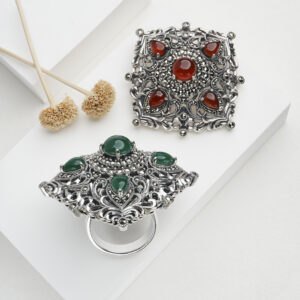
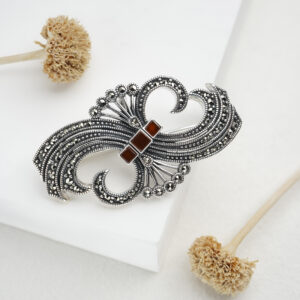
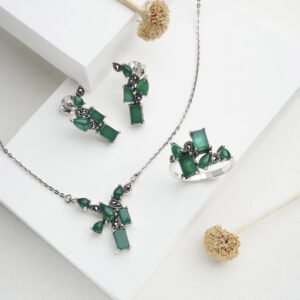
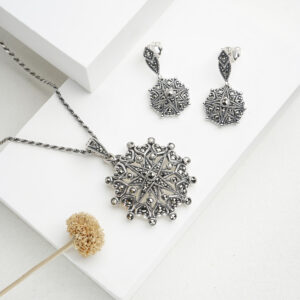
For complex designs — intricate pavé marcasite settings, detailed filigree work, mixed-material pieces combining silver with gemstones and enamel — this craft depth is not a nice-to-have. It is the difference between a piece that looks beautiful in a product photograph and one that also survives years of daily wear without losing stones or degrading at joints and closures.
Factory Infrastructure Built for International Trade
Thailand’s jewelry manufacturing infrastructure has been built specifically to serve international wholesale and OEM buyers. This means investment in the tooling, casting equipment, electroplating facilities, and quality laboratories required to produce to international standards — not domestic market standards.
It also means familiarity with the logistics, documentation, and compliance requirements of exporting jewelry to markets in Europe, North America, the Middle East, and Asia-Pacific. An experienced Thai OEM jewelry manufacturer understands CE marking requirements, nickel regulations for the EU market, hallmarking conventions for the UK market, and customs documentation for US importers. This operational knowledge reduces friction for international buyers substantially.
Gemstone Access
Bangkok is one of the world’s primary gemstone trading hubs. Ruby, sapphire, garnet, topaz, labradorite, onyx, turquoise, mother-of-pearl, and dozens of semi-precious varieties in consistent sizes, cuts, and quality grades are available to Bangkok manufacturers at terms that buyers sourcing from Europe or North America simply cannot access.
For OEM and private label jewelry buyers who want specific stone colours in their branded range — matching your brand’s colour palette, for example, or specifying a signature stone across a product line — Bangkok’s gemstone market gives you options that are genuinely unmatched.
What You Can Customise: A Complete Overview
One of the most common questions from buyers exploring custom jewelry Thailand production for the first time is: how much can actually be changed? The answer is: considerably more than most buyers expect.
Design
From our catalogue: Any design in the Hong Factory catalogue can be produced as a private label piece. Stone substitutions, size adjustments, and finish changes are available within the parameters of each design.
From your brief: For OEM production, you can provide design sketches, reference images, technical drawings, or a detailed design brief. Our in-house design team translates briefs into production-ready artwork and produces wax models or CAD renders for your approval before production begins.
New from scratch: For buyers with a distinctive brand aesthetic who need completely original designs, we offer full design development from concept to finished piece. This service involves a development timeline and design fee; contact us to discuss your requirements.
Materials
Silver standard: All production is in 925 sterling silver as standard. We do not produce pieces in silver-plated or base metal alloys — our commitment to 925 sterling is absolute.
Gemstones: Any stone available in our current inventory or sourceable from Bangkok’s gemstone market can be specified. We can match specific Pantone colours where suitable stones exist, and we advise on the best stone options for any given design and price target.
Finish: Options include standard oxidised silver (our signature antique finish), bright polish (no oxidation), partial gold vermeil accents, and matte brushed finishes on select designs.
Sizing
Standard ring production sizes are 5–9 (US sizing). Extended sizes are available on request. Chain lengths for necklaces and bracelets can be specified at order stage.
Branding and Packaging
Hallmarking: Every piece is stamped with the 925 silver hallmark as standard. Additional brand hallmarks can be discussed for high-volume OEM accounts.
Packaging: We produce pieces without manufacturer branding as standard for private label orders. Branded packaging — boxes, pouches, hang tags, certificates of authenticity, tissue paper inserts — can be arranged. Buyers typically source their own branded packaging and ship it to us for fulfilment, or work with our packaging suppliers for a consolidated solution.
Labelling: Care labels, country of origin labels, and retail price tags can be attached per your specifications.
The OEM and Private Label Production Process: Step by Step
Understanding the production journey from initial brief to delivered goods helps buyers plan timelines, set customer expectations, and manage inventory cycles effectively.
Step 1: Initial Consultation
The process begins with a conversation. Tell us about your brand, your target customer, your retail price points, and the type of jewelry you want to produce. If you have existing designs or references, share them. If you are starting from a mood board or brand aesthetic, share that instead.
From this conversation, we establish whether private label or OEM production is the better fit, identify suitable designs or design directions, and outline the production parameters — quantities, timeline, and indicative pricing.
Step 2: Design Selection or Development
For private label: Browse our catalogue and identify designs you want to produce under your brand. We can provide product samples for evaluation before committing to production quantities.
For OEM: Our design team produces sketches, renderings, or wax models based on your brief. You review and approve, request revisions, or approve for production. This stage typically takes 1–2 weeks for straightforward designs and longer for complex or multi-component pieces.
Step 3: Sampling
Before full production, we produce a pre-production sample — typically 1–3 pieces — for your approval. This sample confirms the design execution, stone quality, finish, and sizing before we commit materials and setter time to the full run.
Sampling adds time to the process but eliminates the risk of discovering a quality or specification issue at full-production scale. For OEM buyers producing original designs, sampling is strongly recommended. For private label buyers selecting from proven catalogue designs, sampling is optional but available on request.
Step 4: Order Confirmation and Deposit
Once samples are approved, you confirm your production order — quantities per design, stone specifications, sizing, and any packaging requirements. A deposit is required to initiate production; the balance is due prior to dispatch.
Step 5: Production
Made-to-order jewelry production takes approximately 30–45 days from deposit payment for standard designs. Complex OEM designs with custom tooling or unusual stone requirements may take longer; your account manager will confirm the timeline at order stage.
We provide production updates at key milestones — casting completion, stone setting, finishing — so you know where your order is at any point in the process.
Step 6: Quality Control and Dispatch
Every piece passes our multi-point quality inspection before packaging. For OEM accounts, we can provide photographic documentation of finished pieces prior to dispatch for your review.
Once approved, orders are packed to your specification — with your branded packaging if supplied — and dispatched via your chosen freight method.
MOQ and Pricing for OEM and Private Label Production
Minimum Order Requirements
The minimum order for made-to-order jewelry production at Hong Factory — including OEM and private label — is USD 2,000, with a minimum of 5 pieces per design.
The per-design minimum of 5 pieces reflects the fixed costs of each production run. For OEM designs that require custom tooling or mould-making, higher per-design minimums may apply; your account manager will confirm this at quotation stage.
The USD 2,000 order minimum can be distributed across multiple designs. A typical first private label order might include 8–12 designs at 5–10 pieces each, covering a balanced introductory range across rings, earrings, necklaces, and bracelets.
Pricing Structure
OEM and private label pricing is calculated on a design-by-design basis, taking into account:
- Silver weight: More silver per piece = higher material cost
- Stone specification: Larger stones, rarer varieties, and higher quality grades increase per-unit cost
- Setting complexity: Intricate pavé and mixed-technique designs require more setter time
- Quantity: Higher quantities per design reduce per-unit cost by spreading fixed setup overhead
- Finishing requirements: Additional plating, matte finishing, or special packaging adds cost
For buyers building a private label range, we recommend requesting quotes on 3–5 potential hero designs initially and using those quotes to calibrate your retail pricing strategy before confirming a full range order.
Building a Profitable Private Label Jewellery Brand
For buyers at the stage of establishing or growing a branded jewelry line, here is a framework that our most successful private label customers consistently apply.
Start with a Coherent Range, Not a Catalogue
A private label brand works best when the pieces feel like they belong together — a coherent aesthetic, a consistent material palette, a recognisable point of view. Rather than selecting 30 designs from across our catalogue, identify a clear design direction (Art Deco geometric, vintage floral, contemporary dainty, bold statement) and select 8–12 designs that express it.
A tight, coherent opening range is more powerful commercially than a broad, unfocused one. It gives customers a reason to buy multiple pieces, supports a clear brand story, and makes your visual merchandising more effective.
Price for Margin, Not Just Market
The wholesale-to-retail multiple on well-positioned silver jewelry typically runs from 3x to 5x. At a 4x multiple on a piece that costs you USD 15 wholesale, your retail price is USD 60. Before confirming a private label order, model your pricing at 3x, 4x, and 5x and assess where each design sits competitively in your target market.
Designs that work at 4x or better in your market are your range anchors. Designs that only work at 3x require higher volume to justify inventory investment.
Plan for Replenishment
The commercial value of private label production comes from repeatable supply. When a design sells well, you need to be able to reorder it — in the same quality, with the same stones, to the same specifications.
Build your initial range around designs you plan to carry long-term, and establish the MTO reorder process before you sell out of your first production run. Leaving a gap in your range while waiting for a 45-day production cycle is a missed sales opportunity and a customer experience problem.
Use Packaging as a Brand Signal
Packaging is disproportionately powerful in jewelry retail. A well-considered box, a clean branded pouch, a simple certificate of authenticity — these signals communicate quality and intentionality before the customer opens the package. They justify premium retail pricing and drive gifting occasions.
Packaging does not need to be expensive to be effective. A clean kraft box with a debossed logo and a branded tissue insert costs less than a dollar per unit at volume and transforms the unboxing experience entirely.
Frequently Asked Questions
What is the minimum order for OEM jewelry production at Hong Factory? USD 2,000 order value, with a minimum of 5 pieces per design. For OEM designs requiring custom tooling, higher minimums may apply. Contact us to discuss your specific project.
Can I have completely original designs produced? Yes. Our design team can develop original designs from your brief, sketches, or reference images. Design development involves a timeline and fee structure; contact us to discuss your project.
How long does OEM production take? Standard made-to-order production takes 30–45 days from deposit payment. OEM projects involving original design development or custom tooling take longer. Your account manager will confirm the timeline for your specific project.
Can you match a specific colour or stone I have in mind? In most cases, yes. Bangkok’s gemstone market gives us access to an exceptional range of stones. Share your colour reference or stone specification and we will advise on availability.
Do you sign NDA or exclusivity agreements? We can discuss exclusivity arrangements for OEM designs. Please raise this requirement at the initial consultation stage.
Can I visit the factory? We welcome factory visits from serious wholesale and OEM buyers. Please contact us in advance to arrange.
Do you produce for brands outside Thailand? Yes. We supply OEM and private label buyers in Europe, North America, Australia, the Middle East, and Asia-Pacific. Our team is experienced in export documentation and international logistics for all major markets.
Start Building Your Brand with Hong Factory
Whether you are establishing a private label jewelry line for the first time or looking for a more capable OEM jewelry manufacturer to scale an existing brand, Hong Factory has the craft expertise, design capability, and production infrastructure to make it happen.
Our made-to-order minimum is USD 2,000 with 5 pieces per design. Production takes 30–45 days. And every piece is produced in 925 sterling silver with the same quality standards we have applied to over five decades of international supply.



Jewelry Blog
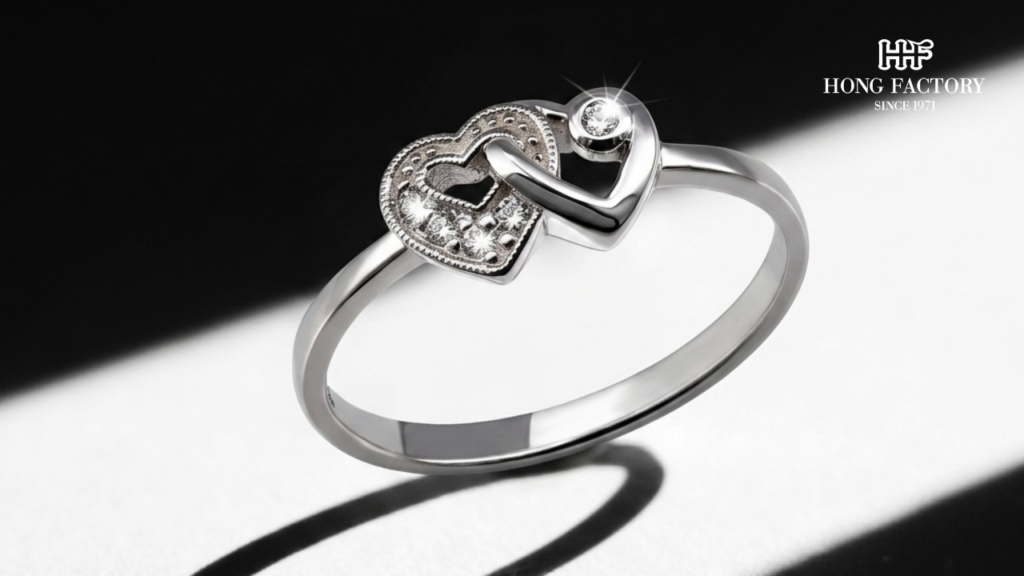
Jewelry Shapes and Their Meanings: A Complete Guide
Jewelry shapes are more than decorative details. Circles, hearts, [...]
Sep

What Causes Sterling Silver Jewelry to Tarnish?
Sterling silver jewelry tarnishes when the metal reacts with [...]
Sep
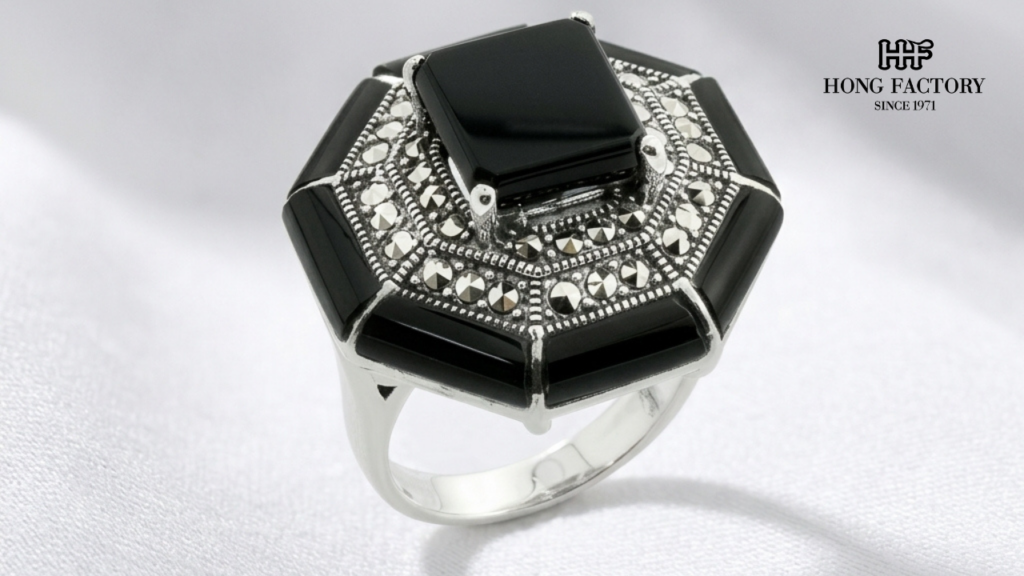
Why Rhodium Plating Is Used on Sterling Silver Jewelry
Rhodium plating is applied to sterling silver jewelry to [...]
Sep
Why Sterling Silver 925 Is Popular for Jewelry Manufacturing
Sterling silver 925 is one of the most widely [...]
Sep
Inside a Jewelry Factory: How Sterling Silver Jewelry Is Made
Sterling silver jewelry may look delicate and effortless, but [...]
Sep
Garnet Gemstone: Meaning, Colors and Jewelry Guide
Garnet is a popular gemstone family known for its [...]
Sep
Citrine Gemstone: Meaning, Color and Jewelry Guide
Citrine is a popular gemstone known for its warm [...]
Sep
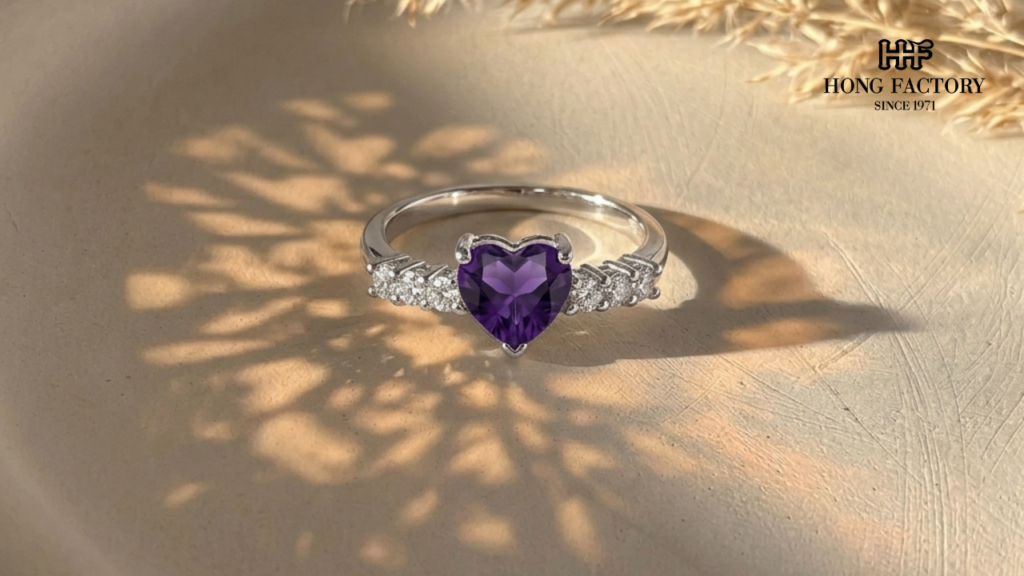
Amethyst Gemstone: Meaning, Color and Jewelry Guide
Amethyst is a popular gemstone known for its beautiful [...]
Sep