
Layering necklaces has become one of the most popular jewelry styling trends in modern fashion. Instead of wearing a single necklace, fashion enthusiasts are combining multiple chains, pendants, and textures to create a stylish layered look. When done correctly, necklace layering can add depth, personality, and elegance to any outfit.
From casual street style to luxury evening wear, layered necklaces can instantly elevate your appearance. The key is learning how to balance different chain lengths, pendant sizes, and materials so that the necklaces complement each other rather than compete for attention.
In this guide, we will explore ten expert styling tips to help you layer necklaces like a professional stylist. Whether you prefer minimalist jewelry or bold statement pieces, these techniques will help you create beautiful layered combinations for any occasion.
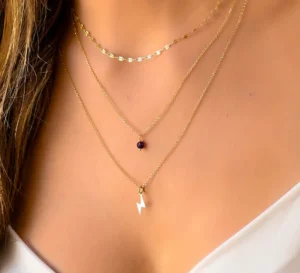
Why Layer Necklaces Is a Popular Jewelry Trend
Layered necklaces have gained popularity because they allow people to express their personal style in a creative way. Instead of relying on a single necklace, layering allows you to combine different chains, pendants, and textures to build a unique jewelry composition.
Fashion stylists often use necklace layering to create visual interest around the neckline. Multiple chains with different lengths create a cascading effect that naturally draws attention. This styling technique works well with both simple outfits and statement fashion pieces.
Another reason the trend continues to grow is versatility. Layered necklaces can be adjusted depending on the occasion. A subtle two-chain combination may be perfect for everyday wear, while a more elaborate layered look works beautifully for evening events.
Because of its flexibility and visual impact, necklace layering has become a staple styling technique in jewelry fashion.
Tip 1: Start with Different Chain Lengths
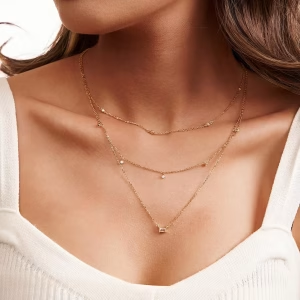
The foundation of successful necklace layering is choosing chains with different lengths. If all necklaces sit at the same height, they will overlap and appear tangled.
A common layering formula includes three levels:
- a short necklace near the collarbone
• a medium-length chain
• a longer pendant necklace
This arrangement creates a natural visual flow and allows each necklace to stand out individually.
Tip 2: Choose a Focal Pendant
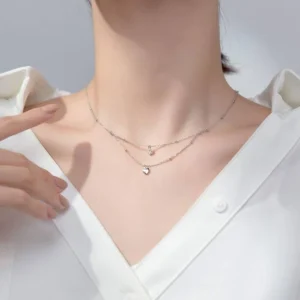
A layered necklace arrangement often looks best when there is a clear centerpiece. This focal piece is usually a pendant necklace that sits slightly lower than the others.
The pendant may feature a gemstone, vintage motif, or decorative charm. By placing the statement piece in the middle or lower layer, the overall styling appears balanced.
Tip 3: Mix Chain Styles
Combining different chain styles can make your layered necklace look more dynamic. For example, pairing a delicate chain with a slightly thicker chain adds contrast and texture.
Popular combinations include:
- fine cable chains
- textured chains
- pendant chains
- vintage-inspired chains
Mixing chain styles prevents the layered look from appearing flat or repetitive.
Tip 4: Balance Necklace Thickness
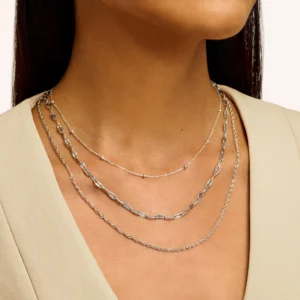
When layering necklaces, it is important to balance the thickness of each chain. If every necklace is thick and heavy, the look may feel overwhelming.
Instead, combine thinner chains with one slightly bolder piece. This creates a sophisticated layered appearance while keeping the overall style elegant.
Tip 5: Add Meaningful Charms
Charms and symbolic pendants can add personality to layered necklaces. Many people include charms that represent special memories, initials, or meaningful symbols.
This approach makes necklace layering feel more personal and unique.
Tip 6: Combine Metals for a Modern Look
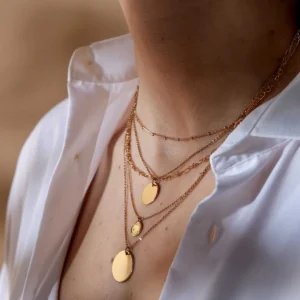
Mixing metals is no longer considered a fashion mistake. In fact, combining different metal tones can create a very stylish layered effect.
Sterling silver necklaces can be paired with gold or rose-gold tones to create contrast. This technique works especially well when each necklace has a slightly different design.
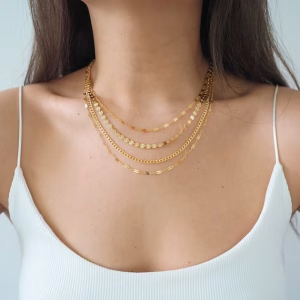
Tip 7: Consider Your Neckline
Your clothing neckline should influence how you layer necklaces. For example:
- V-neck tops pair well with longer pendant necklaces
- scoop necklines work well with medium-length layers
- high necklines often look best with longer chains
Matching your necklace layers with the shape of your outfit creates a harmonious look.
Tip 8: Use Different Pendant Sizes
If multiple necklaces include pendants, vary their sizes to avoid visual clutter. A larger pendant can act as the focal point, while smaller charms add subtle details.
This technique keeps the layered look organized and visually appealing.
Tip 9: Avoid Overcrowding
While layering is about combining multiple necklaces, it is important not to add too many pieces at once. Most stylists recommend layering two to four necklaces for a balanced result.
Too many chains can make the jewelry look tangled or overwhelming.
Tip 10: Choose High-Quality Jewelry
Quality craftsmanship plays an important role in necklace layering. Well-made necklaces maintain their shape, shine, and durability even when worn frequently.
Sterling silver necklaces are especially popular for layering because they are lightweight, versatile, and easy to combine with different designs.
Jewelry manufacturers that specialize in sterling silver and marcasite jewelry often produce beautifully detailed necklaces that work perfectly in layered styling.
Learning how to layer necklaces like a professional stylist is all about balance, creativity, and personal expression. By combining chains of different lengths, textures, and pendants, you can create elegant layered looks that complement any outfit.
Whether you prefer subtle minimalist layers or bold statement combinations, necklace layering allows you to experiment with your jewelry and express your unique style.
With the right approach, layered necklaces can transform even the simplest outfit into a fashionable and sophisticated look.



Jewelry Blog
HOW TO LAYER NECKLACES LIKE A PRO: 10 EXPERT STYLING TIPS
Layering necklaces has become one of the most popular [...]
Mar
TYPES OF EARRINGS: DISCOVER THE PERFECT STYLE FOR EVERY OCCASION
Earrings are one of the most versatile and timeless [...]
Mar
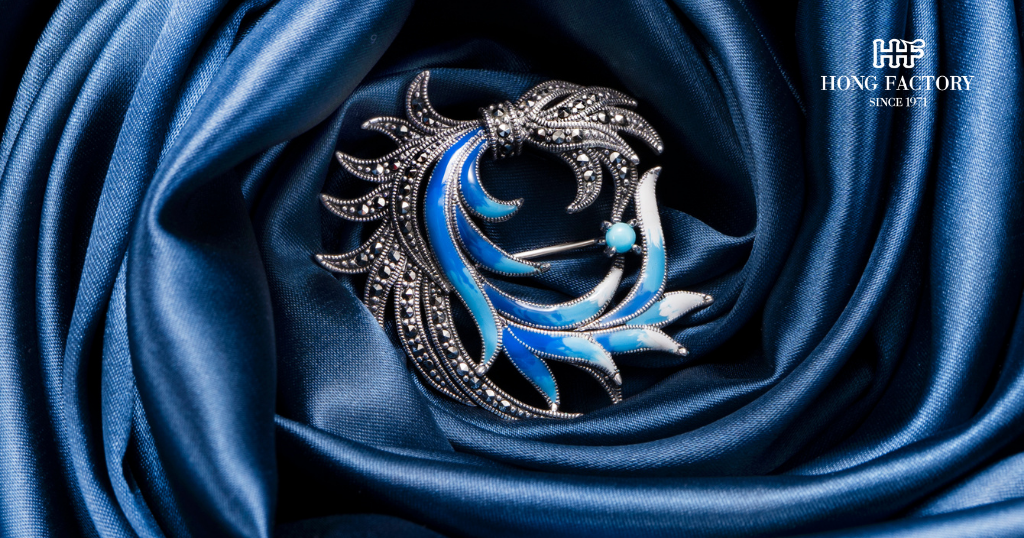
PRICE DIFFERENCE BETWEEN SILVER AND STERLING SILVER
When shopping for jewelry or investing in precious metals, [...]
Mar
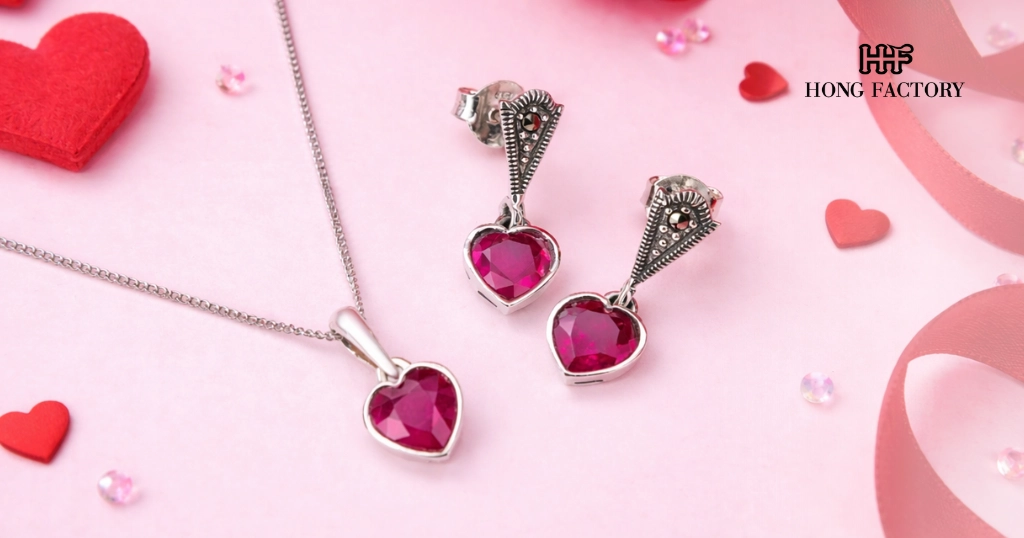
Premium 925 Sterling Silver Jewelry for Valentine’s Day
Valentine’s Day is more than just a romantic celebration. [...]
Feb
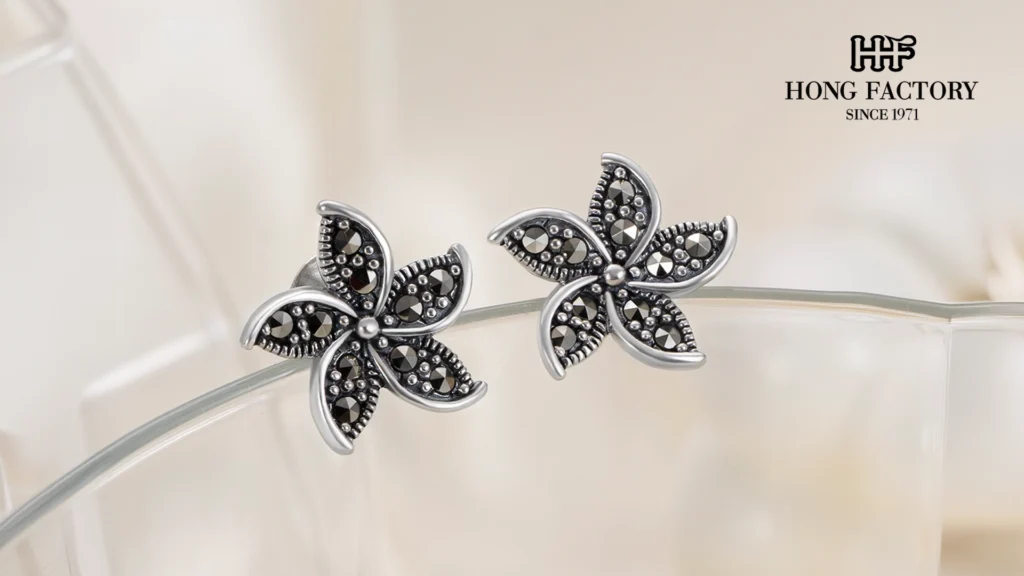
Top 5 Best-Selling Earrings by Hong Factory in 2025
In 2025, the global silver jewelry market continued to [...]
Feb
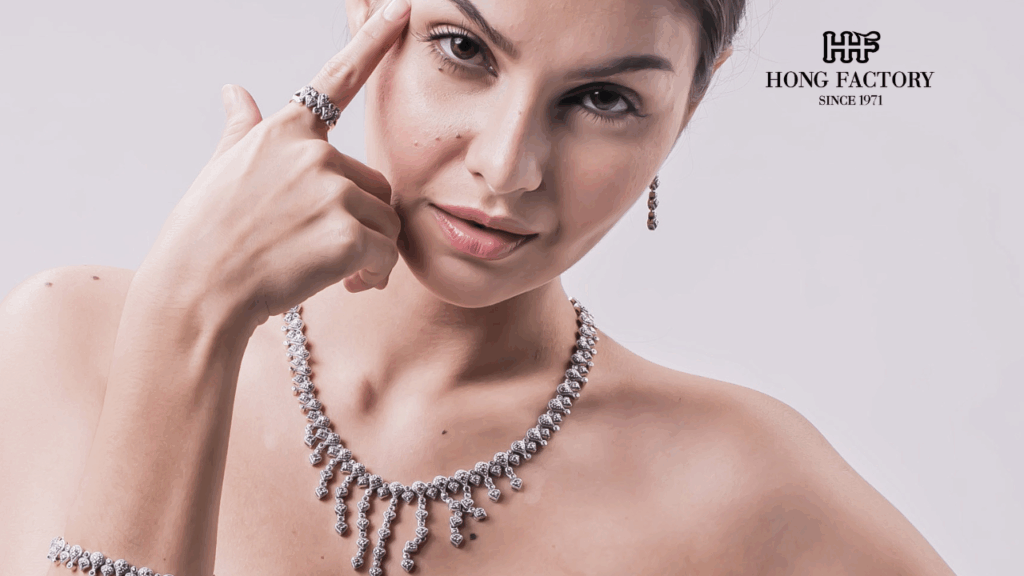
Why Marcasite Jewelry Is Making a Huge Comeback in 2025
1. The Revival of Vintage-Inspired Fashion Trends Marcasite jewelry [...]
Nov
A Complete Guide to Starting a Jewelry Business with OEM Manufacturers
1. Introduction: Why OEM Manufacturing Is the Future of [...]
Nov
Behind the Craft: How Our Thai Artisans Create Timeless Jewelry Pieces
1. The Heart of Thai Craftsmanship Timeless Jewelry Pieces [...]
Nov