
Every wholesale jewelry buyer faces the same fork in the road: do you order from existing inventory and receive stock within days, or do you commission production to your exact specifications and wait 30–45 days for a more tailored result?
It is one of the most consequential sourcing decisions you will make — and the right answer is not the same for every business, every season, or even every design within the same order.
This guide gives you the complete picture: what ready stock jewelry and made-to-order jewelry each offer, where each model delivers and where it falls short, and a practical framework for deciding which — or which combination — is right for your business right now.
The Core Difference
Before diving into the detail, here is the essential distinction:
Ready stock is finished jewelry sitting in the warehouse, available for immediate dispatch. What you see in the inventory is what you get — the design, the stones, the sizes, the finish. Speed and flexibility are the advantages. Customisation is limited to what is already in stock.
Made-to-order is jewelry produced specifically for your order, to your specifications. Stone colour, ring sizes, finish, and — for OEM buyers — design itself can all be tailored. The trade-off is time: production takes approximately 30–45 days from order confirmation.
Both models are factory-direct from Hong Factory’s Bangkok production facility. Both are produced in 925 sterling silver to the same quality standards. The difference is purely in timing, flexibility, and the degree of customisation available.
Ready Stock Jewelry: Everything You Need to Know
How It Works
Ready stock is Hong Factory’s pre-manufactured inventory — designs we produce in advance based on our knowledge of wholesale demand patterns and buyer preferences built over more than five decades of international trade.
When you place a ready stock order, you are selecting from designs that are finished, inspected, and ready to ship. There is no production queue, no waiting for stones to be sourced, and no setter allocation required. Your order is picked, packed, and dispatched — typically within a few business days of payment confirmation.
The Minimum Order
Ready stock orders have a minimum order value of USD 1,000. There is no minimum quantity per design — you can build an order that spans dozens of different pieces, one of each, up to the minimum value threshold.
This flexibility is one of the most commercially useful aspects of ready stock for buyers who are testing new designs, building a diverse display, or filling gaps in an existing range.
What Ready Stock Covers
Our ready stock selection draws from the most consistent performers across the full Hong Factory collection:
- Wholesale marcasite jewelry — rings, earrings, necklaces, bracelets, and brooches in Art Deco, vintage, and contemporary styles
- Gemstone silver pieces — marcasite designs with onyx, garnet, amethyst, mother-of-pearl, and other semi-precious stones
- 925 sterling silver jewelry — classic and contemporary designs without stones
- Seasonal and trend-driven designs — updated regularly to reflect current market demand
Availability changes as inventory is purchased and replenished. For an up-to-date ready stock list, browse our catalogue or contact our wholesale team directly.
The Strongest Use Cases for Ready Stock
Testing new designs. Before committing to a made-to-order run of 20 or 50 pieces of a single design, buying 2–3 from ready stock lets you test retail response with minimal inventory risk. If it sells, you have data to support a larger MTO order.
Replenishing proven bestsellers. When a design you already know sells well appears in ready stock, ordering immediately secures inventory without the production wait.
Responding to unexpected demand. A feature in a magazine, a spike in online interest, an unexpectedly strong selling period — ready stock lets you respond to demand surges without a 45-day lead time standing between you and the sale.
First orders. For buyers placing their first wholesale marcasite jewelry order, ready stock is the natural starting point. The lower minimum, the absence of per-design commitments, and the immediate availability reduce the risk of a first sourcing relationship to a manageable level.
Filling display gaps. A coherent boutique display needs variety — across price points, piece types, and design styles. Ready stock lets you fill gaps without waiting for custom production.
The Limitations of Ready Stock
Limited sizing. Ready stock rings are held in standard sizes (typically 5–9 US). If your customer base requires extended sizes, you will need to supplement with made-to-order.
No stone substitution. The stones in ready stock pieces are fixed. If you want a particular design in labradorite instead of onyx, or in green amethyst instead of garnet, made-to-order is the only option.
Availability is not guaranteed. Popular designs sell out. If a ready stock design becomes a core part of your range, building a made-to-order relationship for that design is the only way to guarantee consistent supply.
Less differentiation. Ready stock designs may be sold by other buyers. For boutiques where exclusivity or brand distinctiveness matters, made-to-order offers a stronger competitive position.
Made-to-Order Jewelry: Everything You Need to Know
How It Works
Made-to-order is Hong Factory’s custom production service. You select designs from our catalogue — or, for OEM buyers, provide your own designs — and we produce them to your exact specifications. Stone type and colour, ring sizes, metal finish, and production quantities are all confirmed before production begins.
The made-to-order process follows a clear path: design selection or development → sample approval (optional but recommended for new designs) → order confirmation and deposit → production → quality control → dispatch.
The Minimum Order
Made-to-order production has a minimum order value of USD 2,000 and a minimum of 5 pieces per design.
The 5-piece per design minimum reflects the practical economics of custom production: each design run involves fixed setup costs — materials staging, setter preparation, finishing calibration — that must be spread across a viable quantity to sustain wholesale pricing.
The USD 2,000 total can span multiple designs. A typical opening MTO order might include 6–10 designs at 5–10 pieces each, building a balanced branded range across jewelry categories.
Production Lead Time
From deposit payment to completed production, the standard lead time is 30–45 days. This covers the full production process:
- Stone sourcing and quality grading
- Casting or sheet preparation
- Individual stone setting
- Oxidation and finishing
- Multi-point quality inspection
- Packaging and pre-shipment preparation
We provide milestone updates throughout production and confirm dispatch dates before shipment. For buyers working towards a specific selling window — a seasonal peak, a trade show, a product launch — we recommend building 2–3 weeks of buffer into your ordering timeline to absorb any production variable.
What Made-to-Order Enables
Specific sizes. Need rings in size 10, 11, or 12? Need a consistent size 6 across a full ring range? Made-to-order is the only way to specify sizes outside the standard ready stock range.
Stone substitutions. Want the same design in five different stone colours — one per season, or one to match each of your brand’s signature colours? MTO makes this straightforward.
Consistent replenishment. Once a design is established in made-to-order, you can reorder it repeatedly with identical specifications. Same stones, same sizes, same finish, same quality. This is how serious jewelry reseller suppliers build reliable product lines that their customers return for season after season.
Private label and OEM production. Made-to-order is the production backbone of private label and OEM arrangements. Your branded range — produced to your design, with your packaging, under your name — is built on the MTO platform.
Higher quantities at better per-unit pricing. As MTO quantities per design increase, per-unit cost decreases. Buyers ordering 20, 50, or 100 pieces of a single design achieve pricing that makes their retail margins significantly more comfortable.
The Limitations of Made-to-Order
Lead time requires planning. Forty-five days is not a long production cycle in manufacturing terms, but it does require inventory planning discipline. Buyers who manage stock on a reactive basis — ordering when they run out — will find MTO lead times disruptive. MTO rewards buyers who plan ahead.
Higher minimum commitment. At USD 2,000 with 5 pieces per design, MTO involves a larger upfront commitment than ready stock. For buyers still establishing which designs will perform in their market, this can mean committing to inventory before the commercial case is fully proven.
Less flexibility for trend-chasing. If a design trend emerges suddenly and you want to be stocking relevant pieces immediately, the MTO lead time works against you. Ready stock — and the standing inventory our buyers can access — is better suited to rapid trend response.
How to Choose: A Decision Framework
Rather than choosing one model over the other, the most effective approach for most wholesale marcasite jewelry buyers is to use both — strategically, for different purposes within the same range.
Here is a practical framework:
Use Ready Stock For…
New designs you haven’t tested. Never commit to a 20-piece MTO run of a design you haven’t sold before if a ready stock version is available. Buy 2–5 pieces, put them on the floor, and let your customers tell you whether the design has a place in your range.
Rapid replenishment of known performers. If a design you already stock appears in ready stock, buying immediately is almost always the right call — you already know it sells, and getting stock back on display beats waiting 45 days.
Seasonal or trend-responsive buying. For designs tied to a season or trend, the ready stock response time is often commercially necessary. A marcasite celestial pendant that fits a current trend needs to be on the shelf while the trend is live, not after it has peaked.
First orders with a new supplier. Ready stock lets you evaluate quality, packaging, and logistics with a manageable financial commitment before deepening the relationship.
Use Made-to-Order For…
Proven designs that are running out. The moment a design becomes a consistent seller in your boutique, it should move onto a rolling MTO reorder schedule. Do not rely on it appearing in ready stock.
Your brand’s signature pieces. Every boutique needs anchor designs — pieces that define the store’s identity and that customers return for. These should be on MTO for consistent supply and, where possible, specification exclusivity.
Range building with private label intent. If you are building a branded product line, MTO is how you establish the product foundation. Start with 6–10 designs that define your aesthetic, produce them to your specifications, and build on that foundation over time.
Larger quantities. As your volume per design grows, MTO pricing becomes substantially more attractive than ready stock pricing. Once you know a design sells, the economics favour committing to larger MTO quantities.
The Hybrid Approach in Practice
Here is how a well-managed boutique buyer might structure their sourcing across a season:
Core range (MTO, rolling orders): 8–12 designs on standing made-to-order — the boutique’s signature pieces, reordered in consistent sizes and specifications every 6–8 weeks. These are the designs customers come back for.
New additions (ready stock, trial quantities): Each buying cycle, add 4–8 new designs via ready stock at 2–5 pieces each. Evaluate sell-through over 6–8 weeks. Designs that perform well graduate to the MTO core range. Others are retired.
Opportunistic replenishment (ready stock): When proven designs appear in ready stock between MTO cycles, buy them. Quick replenishment at no lead time cost is always valuable.
This structure gives you the consistency and scale economics of MTO for your proven range, the low-risk testing capability of ready stock for new additions, and the flexibility to respond quickly to unexpected demand or opportunities.
What the Best Jewelry Reseller Suppliers Offer
For jewelry reseller suppliers evaluating manufacturers to partner with, the ready stock vs MTO question is one dimension of a broader assessment. The best manufacturer relationships are built on several foundations:
Consistent quality across order types. Ready stock and made-to-order pieces should be indistinguishable in quality. At Hong Factory, both order types are produced in the same facility, by the same craftspeople, to the same 925 sterling silver standard with the same quality control process.
Transparent communication. Lead times, stock availability, production milestones, and dispatch dates should be communicated proactively — not chased by the buyer. A good manufacturer keeps you informed without needing to be asked.
Responsive to specification. When you specify a stone colour, a size, or a finish in a made-to-order brief, you should receive exactly that. Inconsistency between what was ordered and what arrives is a sign of poor production discipline that will become a larger problem at scale.
Accessible minimum orders. The best manufacturer relationships for growing businesses are those where you can start small, prove the commercial case, and scale without being pushed into quantities you are not ready for. Hong Factory’s USD 1,000 ready stock and USD 2,000 MTO minimums are designed for this.
Design breadth. Whether you are buying ready stock or commissioning MTO, the quality of your product depends on having a strong design library to draw from. With over 10,000 designs in active production, Hong Factory’s catalogue gives buyers a depth of choice that most manufacturers simply cannot offer.
Practical Tips for Managing Both Order Types
Track sell-through by design. Keep a simple record of which ready stock designs sold, how quickly, and at what price. This data is your MTO briefing document — it tells you exactly which designs to put on a rolling made-to-order schedule.
Order MTO before you run out, not after. The most common mistake in MTO management is treating it like a reactive replenishment tool. By the time you have sold out of a design and placed an MTO order, you have 45 days of lost sales ahead of you. Place your reorder when you reach 30–40% of your inventory level, not at zero.
Use ready stock to diversify, MTO to deepen. Ready stock is how you keep your range fresh and varied. MTO is how you build depth in your proven winners. Used together, they create a range that is both dynamic and commercially reliable.
Build seasonal lead times into your planning calendar. If Christmas is your biggest selling period and you want custom MTO pieces on the shelf by 1 November, your order needs to be confirmed by mid-September. Work backwards from every selling peak and add the 45-day production window plus shipping time.
Communicate your brand’s direction to your supplier. The more your manufacturer understands about your customer, your aesthetic, and your price points, the better their ready stock selection and MTO guidance will serve you. Treat your manufacturer as a commercial partner, not just a transaction counterparty.
Frequently Asked Questions
Can I combine ready stock and made-to-order in a single order? Yes. Many buyers place a combined order — ready stock items for immediate dispatch, MTO items for production. We process both within the same order framework, with ready stock dispatched as soon as it is prepared and MTO dispatched on completion of production.
What happens if a ready stock design I want is out of stock? We will notify you and can either substitute a similar available design or place the design on a made-to-order basis at the standard MTO minimums and lead time.
Can I request samples before placing a made-to-order run? Yes. Pre-production samples are available on request before confirming a full MTO order. Sampling adds to the overall timeline but eliminates specification risk.
Is the quality the same for ready stock and made-to-order? Yes. Both order types are produced in our Bangkok facility, in 925 sterling silver, with the same quality control process. Ready stock pieces have been manufactured in advance; MTO pieces are produced to order. The quality standard is identical.
What is the minimum for a first order? USD 1,000 for ready stock, with no per-design minimum. This is the lowest-risk way to begin a wholesale relationship with Hong Factory.
Place Your Order with Hong Factory
Whether ready stock suits your timeline or made-to-order fits your specification needs — or you want to combine both in a single sourcing strategy — Hong Factory has the inventory, the production capability, and the five decades of international wholesale experience to supply your business reliably.
Ready stock orders from USD 1,000, dispatched within days. Made-to-order production from USD 2,000, 5 pieces per design, 30–45 day lead time.



Jewelry Blog
Hallmarks and Stamps: How to Verify Authentic Sterling Silver
Buying Sterling Silver jewelry is an investment in quality, [...]
Jul
Sterling Silver 925 vs Silver Plated: How to Spot the Difference
If you’ve ever shopped for silver jewelry, you’ve probably [...]
Jul
What Is Marcasite? The Complete Guide for Jewelry Retailers
Marcasite jewelry has remained a timeless favorite for decades, [...]
Jul
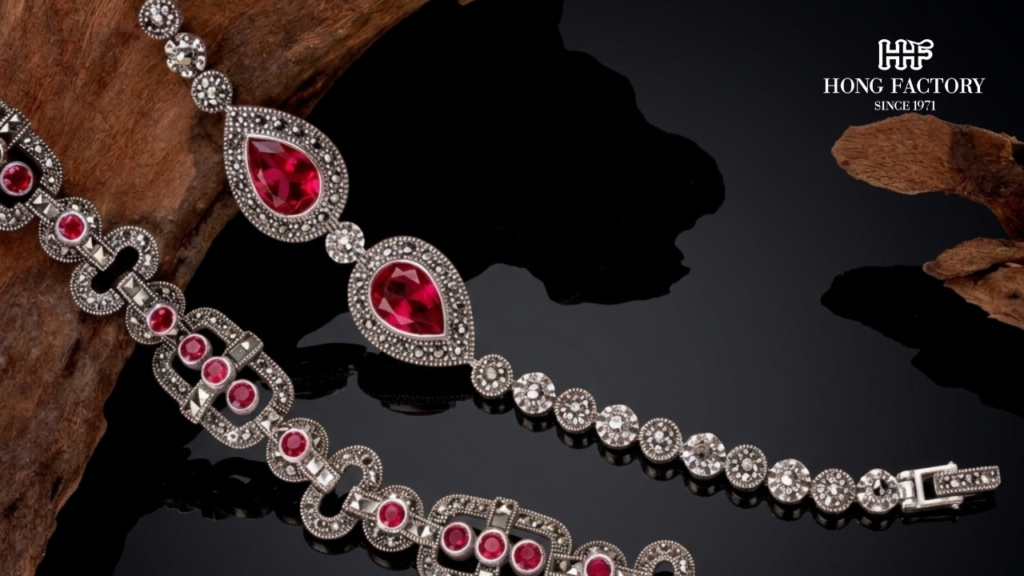
Red Hot: Why Ruby-Toned Jewelry Is Trending This Summer
This summer, bold color is taking center stage—and nothing [...]
Jul
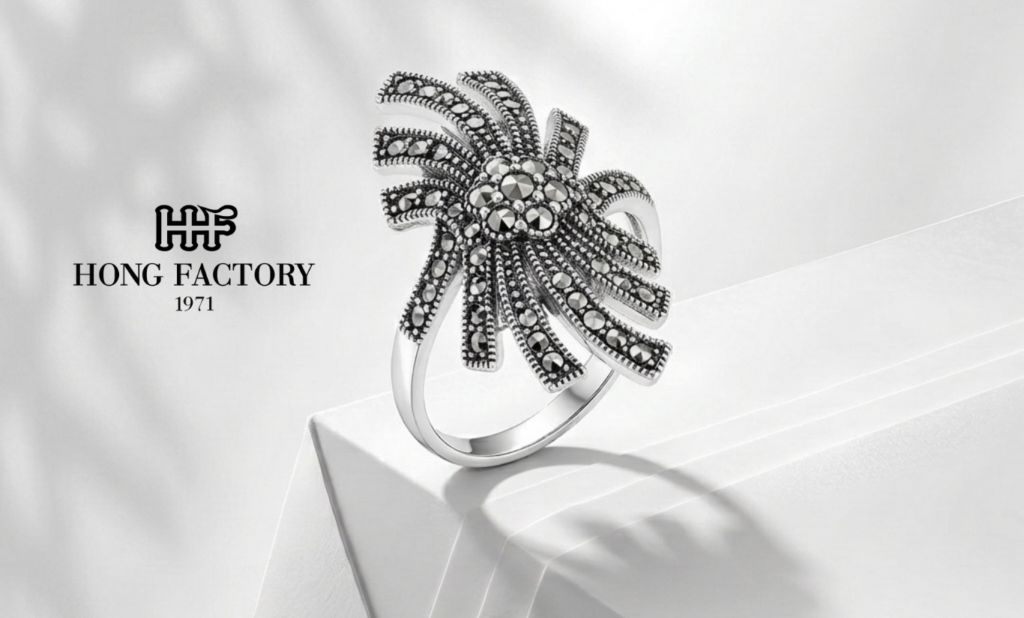
How Marcasite Stones Are Hand-Set into Sterling Silver
The art of setting Marcasite Stones into sterling silver [...]
Jul
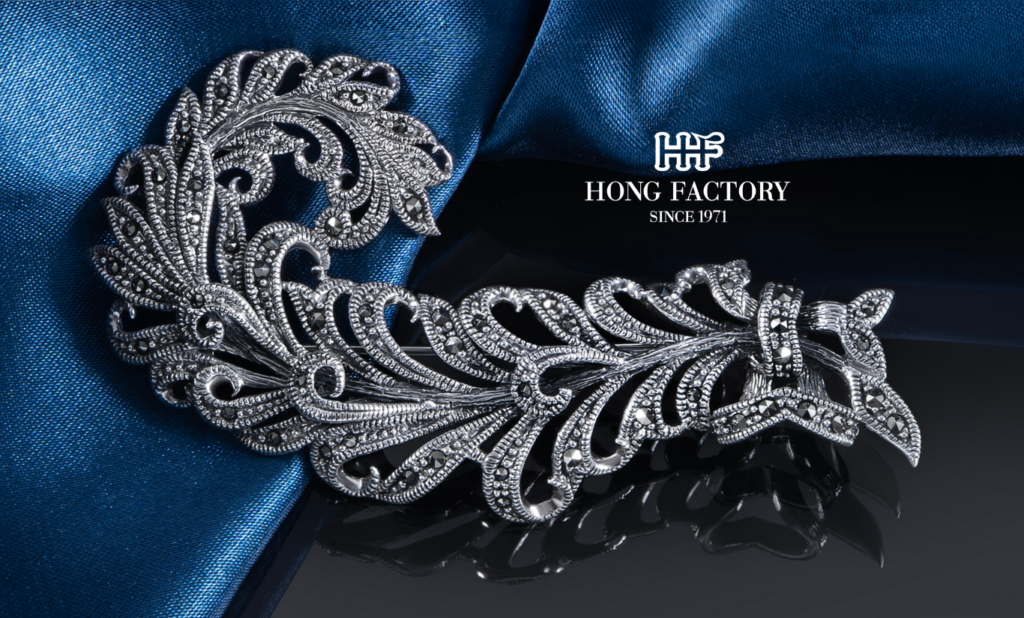
OEM vs ODM: Which Jewelry Manufacturing Model Fits Your Brand?
In today’s competitive global market, choosing the right Jewelry [...]
Jul
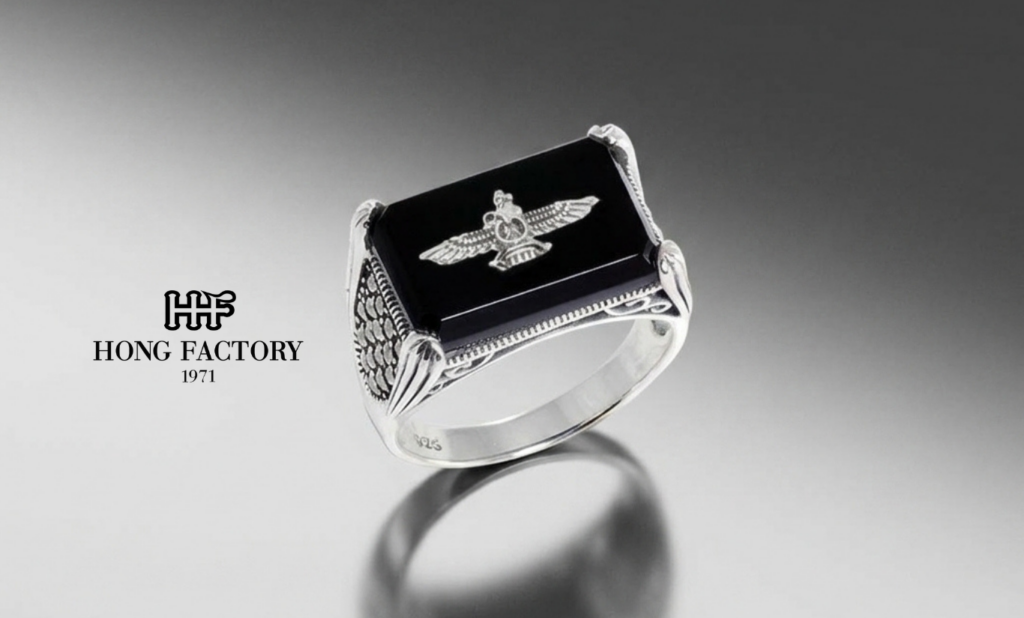
Men’s Silver Jewelry Line: An Untapped Wholesale Opportunity
In today’s evolving fashion landscape, men’s accessories are no [...]
Jul
Marcasite Brooch Revival: Vintage Style Meets Modern Wholesale Demand
In the ever-evolving world of fashion jewelry, trends often [...]
Jul