
There is a moment that every ring stacker knows. You slide on the first ring. Then the second. Then a third. You hold your hand up to the light, tilt it slightly, and watch the way the stones catch at different angles — a constellation of tiny glittering points distributed across your fingers. Something shifts. The hand stops being a hand and becomes a composition.
That moment is what the stacking ring movement is really about. Not accumulation for its own sake. Not the mechanical act of wearing more jewelry. But the deliberate construction of something beautiful — a considered, layered statement that could only belong to you, because no one else made the same choices in the same order on the same day.
And marcasite silver rings are, by almost any measure, the finest material for building that statement.
The dark metallic sparkle of marcasite, the cool precision of oxidised sterling silver, the historical depth of Art Deco and Victorian design references — these are qualities that stack with a richness that simpler, more uniform materials cannot match. A hand stacked in marcasite tells a story. This guide will help you tell yours.
Why Marcasite Rings Were Made for Stacking
Before the technique, the material. Understanding what makes marcasite silver rings specifically well-suited to stacking helps you build combinations with intention rather than accident.
The Tonal Range Is Unusually Deep
Most ring materials offer a single tonal note. Yellow gold is warm. White gold is bright. Plain silver is neutral. But marcasite in oxidised sterling silver operates across a tonal range that most materials simply do not possess.
A densely set marcasite pavé band reads as dark and rich — the stones absorbing and reflecting light at low intensity, the oxidised silver deepening the overall tone. A bright-polished plain silver band reads as clean and light. A ring with a coloured gemstone — deep garnet, vivid amethyst, luminous mother-of-pearl — introduces colour into the composition. A fine silver band with a single row of marcasite sits between these poles.
This tonal range means that a marcasite stack does not read as repetitive even when every piece shares the same material language. Light and dark, dense and spare, coloured and neutral — the variations within the marcasite and oxidised silver palette create natural contrast without requiring you to switch materials.
The Visual Texture Is Complex
Marcasite’s pavé-set surface has a visual texture — the slight variations in stone size, the tiny silver prongs between stones, the three-dimensional quality of the setting — that catches light differently from different angles and at different distances. A stacked hand of marcasite rings is never quite the same twice: it changes with the light, with the angle, with the movement of the fingers.
This complexity is part of the appeal. A hand stacked in lightweight marcasite jewelry has visual interest that rewards close attention and still works at a distance — which is precisely what the best jewelry does.
The Historical References Are Varied Enough to Layer
One of the most sophisticated forms of ring stacking involves combining pieces from different aesthetic traditions — letting a Victorian floral cluster sit alongside an Art Deco geometric band alongside a plain Edwardian-style silver ring. This works with vintage marcasite jewelry in a way that it does not work with more uniform contemporary materials, because each historical reference is visually distinct enough to read as its own voice while still speaking the same material language as the other pieces.
The Foundations: Understanding Ring Proportions
Before building a stack, understand the proportions you are working with. The most successful stacks are built on a deliberate interplay of width, height, and weight.
Width Relationships
Uniform width stacks — three or four bands of the same approximate width — create a clean, architectural effect. The eye reads the stack as a single wide band rather than multiple individual rings, which suits the Art Deco sensibility particularly well. This is the most formal stacking approach.
Varied width stacks — mixing a wider statement ring with medium and fine bands — create a more dynamic, layered effect. The wide ring anchors the stack visually; the finer bands frame it and fill the spaces. This is the most versatile approach and the easiest to build over time, since new bands can be added without disrupting the existing composition.
Graduated width stacks — bands decreasing in width from the base of the finger to the knuckle — create an elegant, tapered effect that makes the finger appear more slender. Traditionally a Victorian approach (multiple graduated rings on a single finger was fashionable in the 1880s), it has returned to contemporary wearing practice as the stacking movement has matured.
Height and Profile
A successful stack also requires attention to ring profile — how high each ring sits above the finger surface.
High-set rings — with raised stone clusters or prominent design elements — should be positioned where they have space to breathe. Crowding a high-profile ring between two others reduces its visual impact and creates practical wearing discomfort. Give statement pieces the space they need.
Low-profile bands — flush-set stones, smooth surfaces, minimal rise from the metal band — stack comfortably in any combination. They are the connective tissue of a successful stack, filling the spaces between statement pieces without competing for attention.
The Role of Plain Silver Bands
Plain silver bands — no stones, no texture, just polished or brushed silver — are among the most undervalued components in the ring stacker’s vocabulary. They perform two critical functions:
Visual breathing space. A stack of unrelieved marcasite can become visually dense and competitive. A plain silver band inserted between two marcasite rings creates a pause — a moment of visual rest that makes both marcasite pieces more visible.
Tonal contrast. Where the oxidised silver of marcasite settings is dark, a bright-polished plain silver band is luminous. This contrast activates both pieces: the marcasite reads as richer, the plain band reads as cleaner.
When in doubt about a stack that is not quite working, insert a plain silver band. It almost always improves the composition.
Building a Stack: Finger by Finger
Different fingers have different visual roles in the composition of a stacked hand. Understanding these roles helps you build a complete hand look that is balanced rather than randomly accumulated.
The Index Finger: The Statement
The index finger is the most visible finger when the hand is in motion — pointing, gesturing, picking up objects. A ring worn here is seen and seen often, which makes it the natural home for a stack’s most deliberate statement.
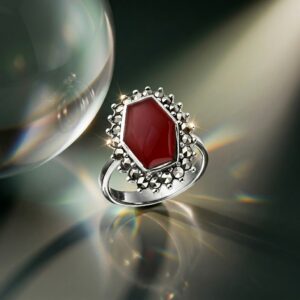
For vintage marcasite jewelry stacking, the index finger typically anchors the stack with its most historically significant piece. An Art Deco hexagonal cluster ring with dense pavé setting. A Victorian coloured-stone ring with garnet or amethyst centre surrounded by marcasite petals. An Edwardian openwork band of extraordinary delicacy.
The index finger can carry a single statement ring or a tight stack of two to three bands. If stacking on the index finger, keep the individual pieces fine enough that the stack reads as a composition rather than as crowding.
Recommended stack:
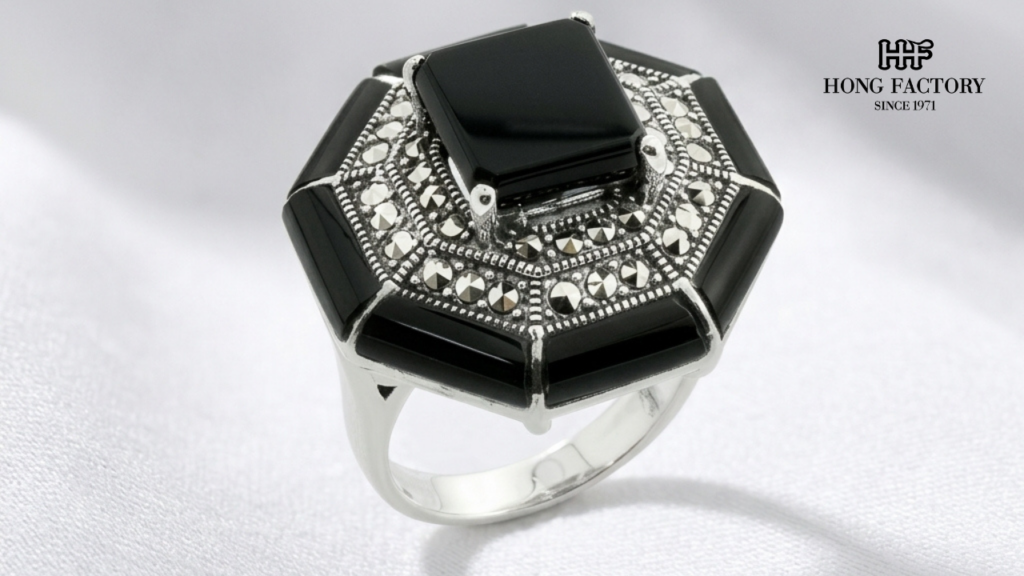
- Art Deco hexagonal marcasite cluster (hero piece)
- Fine plain silver band below
- Slim marcasite pavé band above
The Middle Finger: The Balance Point
The middle finger is the longest and most central, which gives it a grounding role in the overall hand composition. Rings worn here tend to read as the visual centre of gravity.
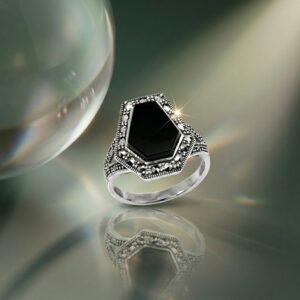
The middle finger suits rings with strong geometric authority — pieces that feel precise and considered. Art Deco geometric bands and clean hexagonal forms work particularly well here. The middle finger is also where you can wear slightly wider or heavier pieces, since its central position distributes the visual weight of the hand most effectively.
Recommended stack:
- Medium-width marcasite Art Deco band (geometric chevron or step motif)
- Fine plain silver band
- Slim band with single row of marcasite
The Ring Finger: The Heritage Finger
The ring finger carries the weight of tradition. In many cultures, it is the finger of commitment — the finger of wedding rings and engagement rings, the finger with historical and emotional significance that the others do not quite share.
For the ring stacker, this heritage can be embraced or subverted. Worn traditionally, the ring finger carries the most significant and personal piece — perhaps a marcasite silver ring with a stone of personal meaning (a birthstone, a stone chosen for its colour or association). Worn subversively, the ring finger becomes the finger deliberately adorned with the most unconventional piece: the oversized Art Nouveau nature motif, the wide Edwardian openwork band, the multi-stone Victorian cluster that reads as an alternative engagement ring.
Either approach works. What does not work is ignoring the ring finger’s visual prominence. Whatever you choose for it will read as a statement — make sure it is a deliberate one.
Recommended stack for the ring finger worn traditionally:
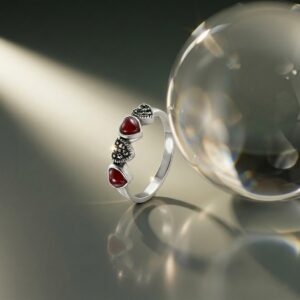
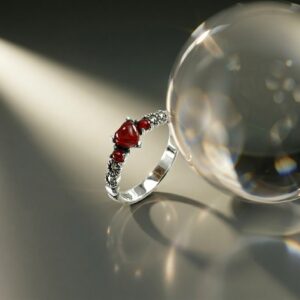
- Victorian gemstone ring (garnet or amethyst centre in marcasite surround)
- Fine marcasite stacking band either side
- Small plain silver band at the knuckle
Recommended stack for the ring finger worn subversively:
- Wide Edwardian openwork marcasite band (the maximum-impact piece)
- Single fine plain silver band below
The Little Finger: The Accent
The little finger is the most playful position in the stacking vocabulary. Rings worn here are clearly decorative rather than traditionally significant, which gives them a freedom that other positions lack.
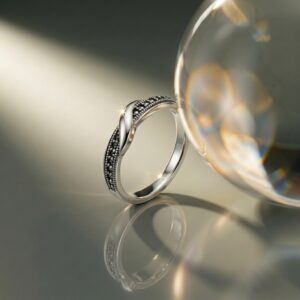
Lightweight marcasite jewelry performs particularly well on the little finger. A single slim marcasite band — too small and fine to anchor a finger further up the hand — has exactly the right scale for the little finger. It reads as a deliberate accent rather than a forgotten addition.
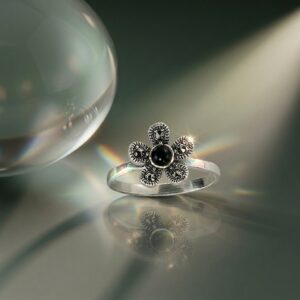
The little finger can also carry a single, slightly more decorative piece than might feel appropriate elsewhere: a small flower stud ring, a fine band with a single coloured stone, a slim chevron marcasite band.
Recommended wear:
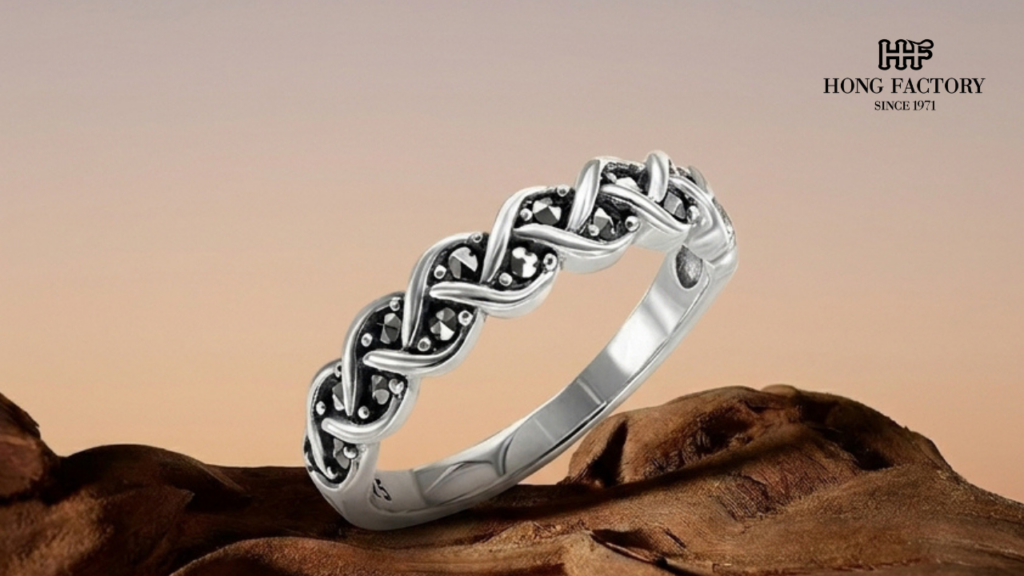
- Single slim marcasite pavé band (fine shank, single or double row of stones)
- Or: small Art Deco geometric stud ring
The Thumb: The Wild Card
The thumb is the wildcard position — not traditionally a ring finger in most Western cultures, but increasingly worn by ring stackers who want to extend the composition across the full hand.
Thumb rings need to be slightly oversized relative to rings worn on other fingers, since the thumb’s proportions are different. They also need a certain visual confidence to avoid looking unintentional. A bold, substantial marcasite piece — a wide Art Deco band, a distinctive nature-motif ring, or a carefully chosen vintage statement piece — works well on the thumb precisely because its scale suits the position.
The thumb stack is optional. Build it last, when the rest of the hand composition is established, and only if it adds to the overall effect rather than creating visual overload.
The Complete Hand: Composition Principles
The Rule of Contrast
A successful ring stack requires contrast — not chaos, but deliberate visual variation. Contrast operates in several dimensions simultaneously:
Weight contrast: At least one piece in a stack should be noticeably heavier or more substantial than the others. This is the hero piece — the one that anchors the composition visually. Without it, a stack of uniformly fine rings reads as timid rather than considered.
Texture contrast: Mix dense pavé surfaces with plain polished silver. Mix the precise geometric quality of Art Deco settings with the organic complexity of a floral or nature-inspired piece. The eye needs variation to engage.
Colour contrast: In a primarily marcasite stack, one coloured stone — a single garnet, an amethyst, a turquoise — provides the chromatic note that the eye is drawn to first. More than two coloured stones in a single hand look risks fragmenting the composition.
The Rule of Repetition
Contrast needs to be balanced by repetition — visual elements that appear more than once across the composition, creating coherence.
In vintage marcasite jewelry stacking, repetition is built in through the material itself: every marcasite ring shares the dark metallic sparkle of the stones and the oxidised silver setting. This shared material language holds the composition together even when individual pieces are stylistically diverse.
Reinforce this cohesion by repeating a single design element across multiple pieces: the same geometric form (hexagonal shapes on two fingers), the same stone type (garnet accents appearing on both the middle and ring finger), or the same shank weight (fine bands consistently mixed with one medium-weight piece per hand).
The Rule of Asymmetry
Resist the urge to mirror a stack exactly across both hands. The most compelling stacked looks are asymmetrical: a heavier stack on the dominant hand, a lighter one on the other; a geometric Art Deco composition on one hand, a softer Victorian arrangement on the other.
This asymmetry is how the most experienced ring stackers communicate their aesthetic personality. The left hand tells a different story from the right, and together the two hands create a complete and complex visual narrative.
The Rule of Negative Space
Perhaps the hardest principle for enthusiastic stackers to accept: rings are more visible when they have space around them. A finger wearing six rings cannot show any of them at their best. A finger wearing three rings — with plain skin visible between the groups — shows each piece clearly and creates natural visual rhythm.
This does not mean restraint for its own sake. It means intentionality. Place rings where they are seen, not simply where they fit.
Five Complete Stack Looks
Look 1: The Art Deco Modernist
A geometric, architectural stack built entirely within the Art Deco vocabulary. Clean lines, hexagonal forms, step-cut arrangements.
Index finger: Art Deco hexagonal cluster ring (hero) + fine plain silver band Middle finger: Medium-width chevron marcasite band + slim plain silver band Ring finger: Art Deco step-cut band with single row of baguette-set marcasite Little finger: Fine slim marcasite pavé band
Mood: Confident, precise, historically authoritative. Works with tailored clothing, minimal gowns, structured fashion.
Look 2: The Victorian Garden
A romantic, layered stack drawing on Victorian florals and symbolism. Organic forms, coloured stones, emotional depth.
Index finger: Plain slim silver band + fine marcasite band Middle finger: Victorian floral cluster ring with garnet centre (hero) Ring finger: Slim amethyst and marcasite band + fine plain silver band Little finger: Small floral stud ring with single marcasite pavé setting
Mood: Romantic, personal, storytelling. Works with flowing dresses, soft textures, evening wear.
Look 3: The Minimalist Edit
A pared-back stack that demonstrates the power of restraint. Two or three pieces, maximum impact, nothing superfluous.
Index finger: Nothing Middle finger: Wide Edwardian openwork marcasite band (hero) — worn alone Ring finger: Single fine marcasite stacking band — worn alone Little finger: Nothing
Mood: Confident, considered, sophisticated. Works with every wardrobe. The stack for those who understand that less is a choice, not a lack.
Look 4: The Colour Story
A stack built around one chromatic focus — a single coloured stone that gives the entire composition its character.
Index finger: Fine plain silver band + slim marcasite pavé band Middle finger: Large Art Deco hexagonal marcasite cluster with labradorite centre (hero) Ring finger: Slim plain silver band Little finger: Fine band with single labradorite cabochon accent
Mood: Modern, design-literate, fashion-forward. The labradorite’s iridescent flash activates the whole stack. Works with any neutral wardrobe, particularly grey, navy, and black.
Look 5: The Full Hand
For those who believe more is more — a complete, deliberate full-hand composition.
Thumb: Wide Art Deco marcasite band (bold, geometric) Index finger: Hexagonal cluster (hero) + fine plain silver + slim marcasite band Middle finger: Victorian coloured-stone ring (garnet) + plain silver band Ring finger: Slim Edwardian openwork band + fine marcasite stacking band Little finger: Single fine marcasite pavé band
Mood: Maximum impact, maximum personality. A complete aesthetic statement. Requires confidence to wear and photographs extraordinarily well.
B
uilding Your Stack Over Time
The most satisfying stacks are not assembled in a single shopping session. They are built over time — each piece added deliberately, in response to what the existing composition needs.
Begin with one hero piece: a ring you love completely, with strong enough aesthetic character to anchor whatever comes next. Wear it alone long enough to understand exactly what it is — its weight, its tonal quality, its historical reference. Then begin adding.
Add contrast before repetition. If your hero is a wide, dark, densely set Art Deco cluster, your first addition should be something fine and light — a slim plain silver band, a minimal single-row pavé band — that gives the hero piece visual breathing room.
Add repetition once contrast is established. A second piece that echoes an element of the hero — the same hexagonal form in a smaller size, the same coloured stone in a different design — creates the coherence that distinguishes a composed stack from a random accumulation.
Add colour last, and sparingly. One coloured stone in a primarily marcasite stack is a finishing note. Two or more can fragment the composition.
Caring for a Marcasite Ring Stack
Multiple rings worn together require slightly more attention to maintenance than individual pieces.
Ring-on-ring wear: When rings are in contact with each other, the silver can show wear at contact points over time. Checking periodically for wear marks and having a jeweler address them before they deepen maintains the appearance of all pieces.
Stone security: In pavé settings, small stones can loosen with impact and wear. Press each stone gently once a month to confirm it has not loosened. Address any loose stone immediately — a stone lost from a setting is much harder and more expensive to replace than a stone caught before it falls.
Cleaning: A soft silver polishing cloth works well for accessible silver surfaces. For detailed pavé settings, a very soft dry brush (a clean, dry toothbrush at low pressure) removes debris without risking stone displacement. Avoid ultrasonic cleaners for marcasite-set pieces.
Storage: Store rings individually or with separating fabric between them to prevent scratching. A ring roll or individual pouches work well for protecting a growing collection.
Frequently Asked Questions
How many rings in a stack is too many? There is no absolute rule, but visual coherence becomes harder to maintain beyond 8–10 rings across both hands. More importantly: if adding a ring makes the stack look busier without making it more beautiful, that ring does not belong in the stack yet. The test is not quantity — it is whether every piece contributes to the composition.
Can I mix marcasite with gold-toned rings? Yes, but with care. The cool, dark quality of oxidised silver marcasite creates a strong contrast with warm gold tones. Use one gold-toned piece as an accent — a single gold-filled band in a primarily silver stack — rather than mixing evenly. Even mixing can fragment the composition tonally.
What ring sizes should I stock if I am a wholesale buyer? For stacking ring collections, the most commercially important sizes are 6, 7, and 8 for the full ring range. Fine stacking bands should also be available in 5 and 9 to serve customers who want to wear them on the little finger or index finger of a larger hand. Made-to-order production allows any size specification.
What is the minimum order for marcasite stacking rings from Hong Factory? Ready stock orders start from USD 1,000 with no per-design minimum — ideal for building a diverse stacking ring display with multiple designs at low quantities. Made-to-order starts from USD 2,000 with a minimum of 5 pieces per design.
Build Your Stack with Hong Factory
Hong Factory’s collection includes hundreds of marcasite silver ring designs suited to stacking — from Art Deco geometric clusters and Edwardian openwork bands to Victorian coloured-stone rings and the slim lightweight marcasite jewelry bands that form the connective tissue of every great stack.
With over 10,000 designs in active production, ready stock available from USD 1,000, and made-to-order capability for custom sizing and specifications, we supply boutiques and retailers in more than 50 countries with marcasite jewelry that is worth stacking — and worth keeping.



Jewelry Blog
Why Rhodium Plating Is Used on Sterling Silver Jewelry
Rhodium plating is applied to sterling silver jewelry to [...]
Sep
Why Sterling Silver 925 Is Popular for Jewelry Manufacturing
Sterling silver 925 is one of the most widely [...]
Sep
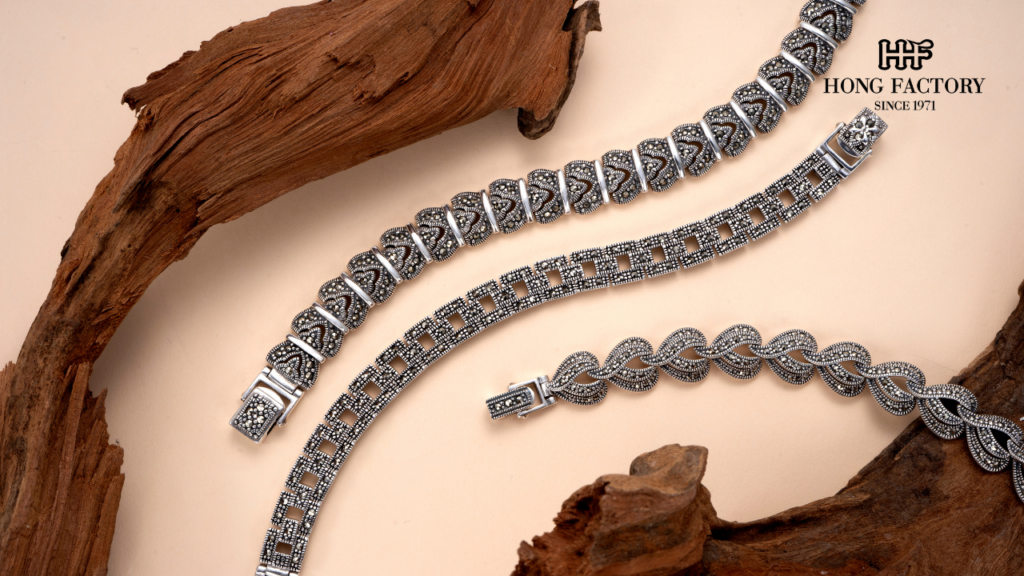
Inside a Jewelry Factory: How Sterling Silver Jewelry Is Made
Sterling silver jewelry may look delicate and effortless, but [...]
Sep
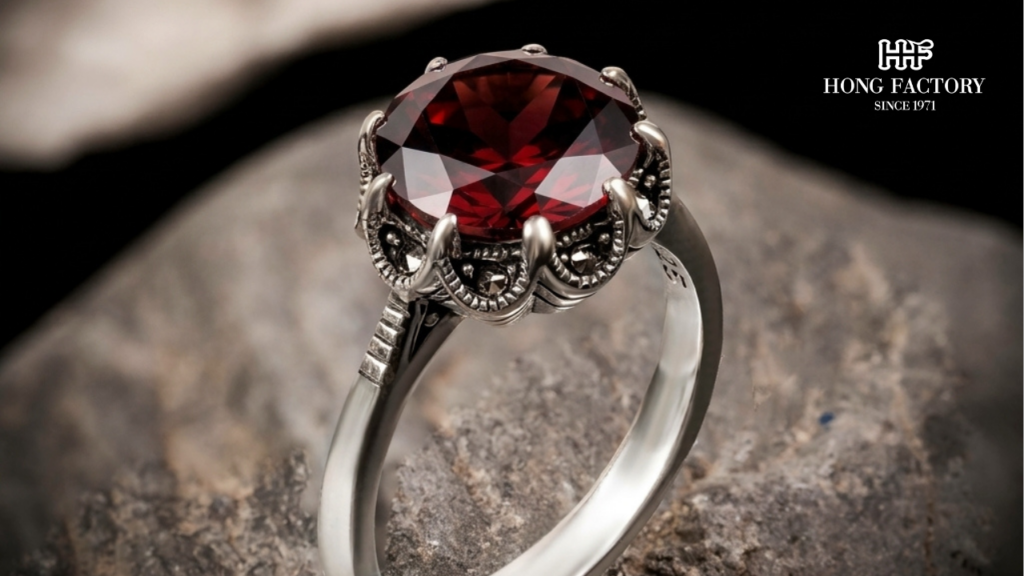
Garnet Gemstone: Meaning, Colors and Jewelry Guide
Garnet is a popular gemstone family known for its [...]
Sep
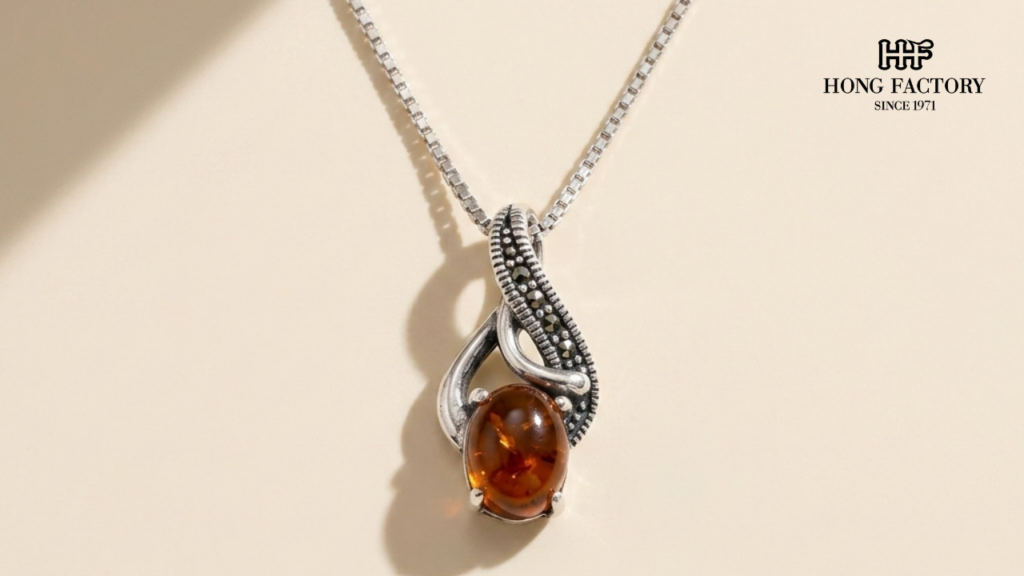
Citrine Gemstone: Meaning, Color and Jewelry Guide
Citrine is a popular gemstone known for its warm [...]
Sep
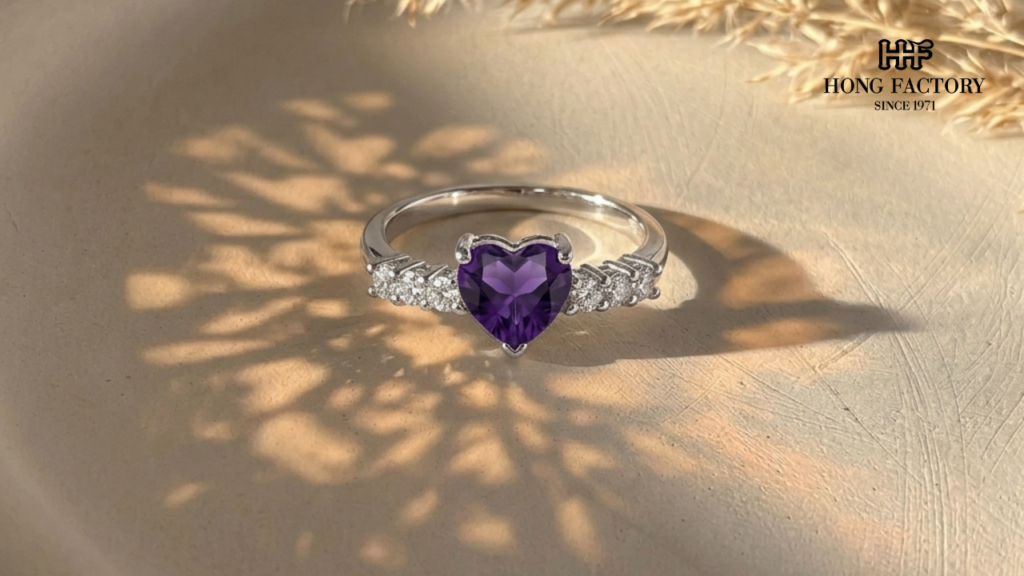
Amethyst Gemstone: Meaning, Color and Jewelry Guide
Amethyst is a popular gemstone known for its beautiful [...]
Sep
Emerald Gemstone: Meaning, Color and Jewelry Guide
Emerald is a popular gemstone known for its rich [...]
Sep
Sapphire Gemstone: Meaning, Colors and Jewelry Guide
Sapphire is a popular gemstone known for its beauty, [...]
Sep