
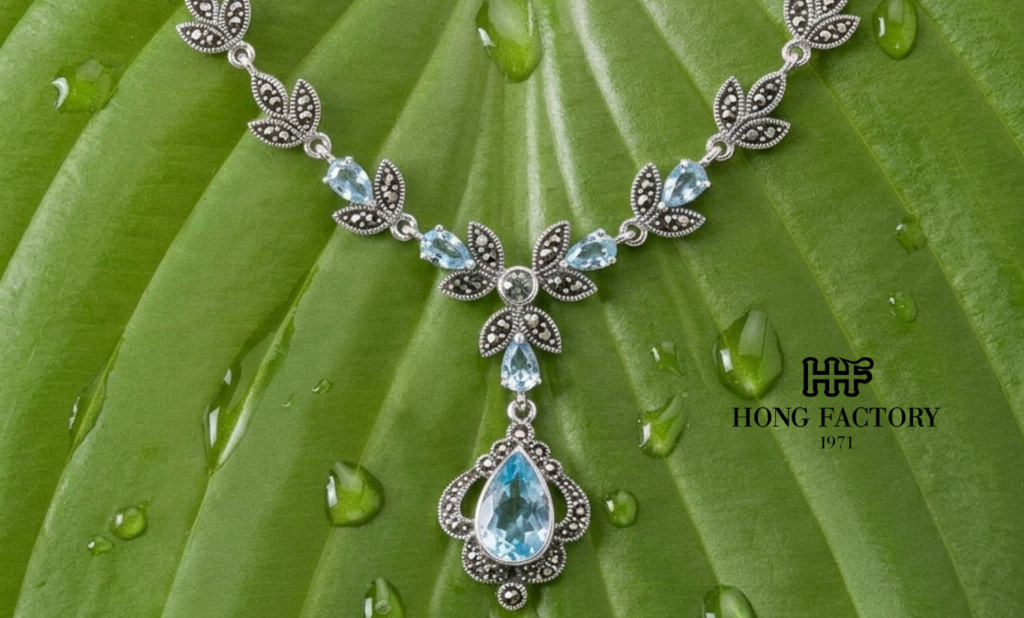
When wholesale buyers and boutique owners source silver jewelry for the first time, one question comes up more than any other: does the quality actually match what Thailand is famous for?
The short answer is yes — but only when you source from manufacturers who work exclusively in 925 sterling silver and can demonstrate it. Understanding what that hallmark means, why it matters for your business, and what separates genuinely high-quality sterling silver jewelry from Thailand from lower-grade alternatives is the foundation of smart sourcing decisions.
This guide covers everything you need to know.
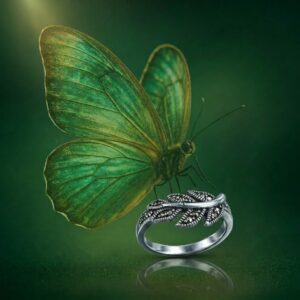
What Does 925 Mean?
The “925” stamp on a piece of silver jewelry is a purity hallmark. It indicates that the metal is composed of 92.5% pure silver and 7.5% other metals — typically copper, though sometimes zinc or germanium in specialist alloys.
Pure silver (999 or fine silver) is too soft for most jewelry applications. It scratches, bends, and deforms under normal wear. The addition of copper at 7.5% creates an alloy that is substantially harder and more durable while retaining silver’s characteristic lustre, colour, and hypoallergenic properties. The result — 925 sterling silver — has been the international standard for quality silver jewelry for centuries.
When you see the 925 stamp on a piece of 925 silver jewelry from Thailand, it is a legally and commercially meaningful assurance. Reputable Thai manufacturers — including Hong Factory — hallmark every piece as standard, and the stamp is your guarantee of material integrity throughout the supply chain.
Why Thailand Leads the World in Sterling Silver Jewelry
Thailand’s dominance in the global sterling silver jewelry market is not accidental. It is the product of several converging advantages that have compounded over decades.
A Silversmithing Tradition Centuries Old
Thailand has been a centre of fine metalwork since at least the 13th century. The royal courts of Sukhothai and Ayutthaya employed master silversmiths whose work — nielloware, repoussé vessels, ceremonial objects — set standards of craftsmanship that remained benchmarks for the region. This tradition never fully industrialised. Instead, it evolved into a modern manufacturing industry that retains the hand-skills of its artisanal heritage while operating at commercial scale.
The result is a workforce that is, quite simply, more skilled at silver jewelry production than almost anywhere else on earth. Stone setting, filigree work, detailed oxidation finishing, and the intricate pavé technique required for marcasite jewelry are all executed with a precision and speed that reflects generations of accumulated expertise.
Bangkok’s Position in the Global Gemstone Trade
Bangkok is one of the world’s primary gemstone trading and processing hubs. Rubies, sapphires, garnets, topaz, and dozens of semi-precious stones pass through the city’s gem district before reaching jewelry markets worldwide. For gemstone silver jewelry manufacturers, this proximity is a significant competitive advantage — unparalleled access to stone variety, consistent quality grading, and responsive supply.
A manufacturer in Europe or North America sourcing coloured stones for silver settings is working at two or three removes from the supply. A Bangkok manufacturer like Hong Factory works with stone suppliers who are minutes away and relationships that span decades. The practical impact on quality, consistency, and design possibility is substantial.
Factory Infrastructure and Skilled Labour
Thailand’s jewelry manufacturing infrastructure — casting equipment, electroplating facilities, quality testing laboratories, finishing workshops — has been built specifically to serve the global wholesale market. Investment in equipment has kept pace with international standards, and the cluster of manufacturers in Bangkok means that component specialists, finishing shops, and quality-control services are readily accessible.
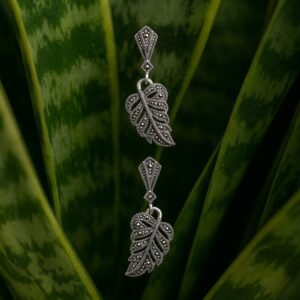
The Making of High-Quality 925 Silver Jewelry: What the Process Looks Like
Understanding how quality sterling silver jewelry from Thailand is produced helps buyers evaluate manufacturer claims and identify the indicators of genuine craft quality.
Metal Sourcing and Alloying
Reputable Thai silver jewelry manufacturers source silver from certified refiners and produce their own 925 alloy in controlled conditions. The copper-to-silver ratio is precisely maintained. Inconsistency at this stage — adding more copper to reduce costs, for example — produces an alloy that is harder and less malleable, making detailed work more difficult and increasing the risk of cracking.
Design and Casting
Most pieces begin as a designer’s drawing, which is developed into a wax model — either hand-carved by a skilled model-maker or produced using CAD software and 3D printing for complex geometries. The wax is then used in lost-wax casting: encased in a plaster mould, melted out, and replaced with liquid silver. The resulting casting is cleaned, filed, and prepared for the next stage.
For simpler designs, sheet silver is cut, shaped, and soldered. Many traditional pieces combine casting and sheet work.
Stone Setting
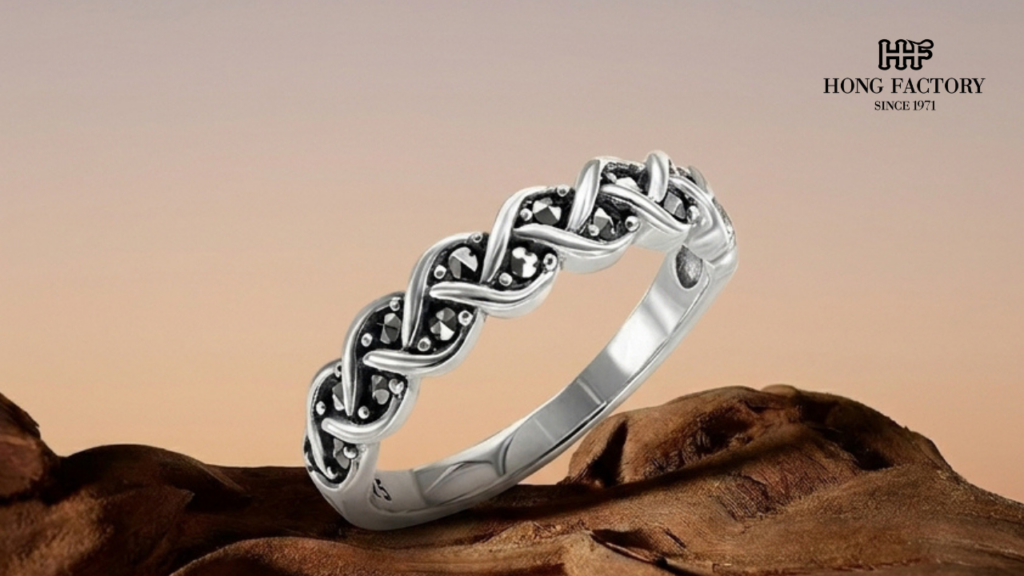
Setting is where craft mastery is most visible and most consequential. In high-quality 925 silver jewelry from Thailand, stones are set individually and by hand. For marcasite and pavé designs, this means placing hundreds of small stones one at a time, each secured with a tiny silver prong bent precisely into place.
The setters at Hong Factory develop years of trained muscle memory to work at production speed without sacrificing stone security or alignment. The gap between an experienced Thai setter and a novice is the gap between a piece that retains every stone through years of wear and one that begins losing stones within weeks.
Finishing: Oxidation, Polishing, and Plating
Once stones are set, pieces go through controlled oxidation — a chemical process that darkens recessed areas of the silver, creating the contrast that defines the antique silver jewelry aesthetic. This is not simply a cosmetic treatment. Applied correctly, oxidation enhances the visual depth of intricate designs dramatically, making the difference between a flat, uninteresting surface and one with genuine three-dimensional character.
The oxidised piece is then selectively polished — bright silver is revealed on raised surfaces, while the darkened recesses are preserved. This selective polishing requires skilled judgment; too much polishing removes the oxidation effect, too little leaves the piece looking unfinished.
Some designs receive additional finishing: rhodium plating for bright-white durability, gold vermeil for warm-toned accents, or a matte brushed finish as a design feature.
Quality Control
A piece that has passed through casting, setting, and finishing is not yet ready to ship. Reputable manufacturers conduct a systematic quality inspection at multiple stages:
- Stone count and security check (each stone individually pressed)
- Oxidation evenness and consistency
- Surface finishing — no tool marks, file scratches, or polishing residue
- Clasp and fitting operation
- Dimensional accuracy (ring sizes, chain lengths, pendant proportions)
- Hallmark presence and legibility
At Hong Factory, every piece passes a multi-point inspection before entering inventory. Returns and complaints are tracked and fed back to production as a continuous improvement mechanism.
Antique Silver Jewelry: Craftsmanship That Tells a Story
Among the most enduring categories in Thai silver jewelry is antique silver jewelry — pieces designed to evoke historical periods and the craftsmanship traditions associated with them. This is not reproduction or fakery. It is a design language that draws on historical aesthetics to create pieces with the depth, character, and visual richness that mass-produced contemporary jewelry rarely achieves.
The Victorian Influence
Victorian jewelry (roughly 1837–1901) was characterised by intricate detail, symbolic motifs — flowers, serpents, birds, stars — and a preference for dark, contrasting settings that complemented the period’s fashion for deep colours and rich textures. Mourning jewelry — pieces incorporating jet, onyx, and dark stones — gave rise to design conventions that translate beautifully into marcasite and oxidised silver today.
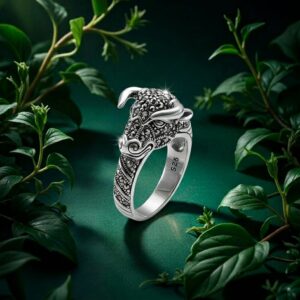
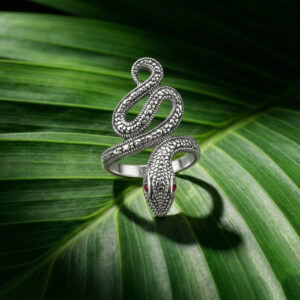
Thai silversmiths working in the antique silver jewelry tradition produce pieces that carry genuine Victorian visual DNA: elaborately detailed floral clusters, cameo-style pendants, serpentine rings, and charm-style bracelets with historical motifs. These pieces perform strongly in boutiques that serve customers with a design vocabulary informed by vintage markets, antique fairs, and heritage fashion.
The Art Deco Influence
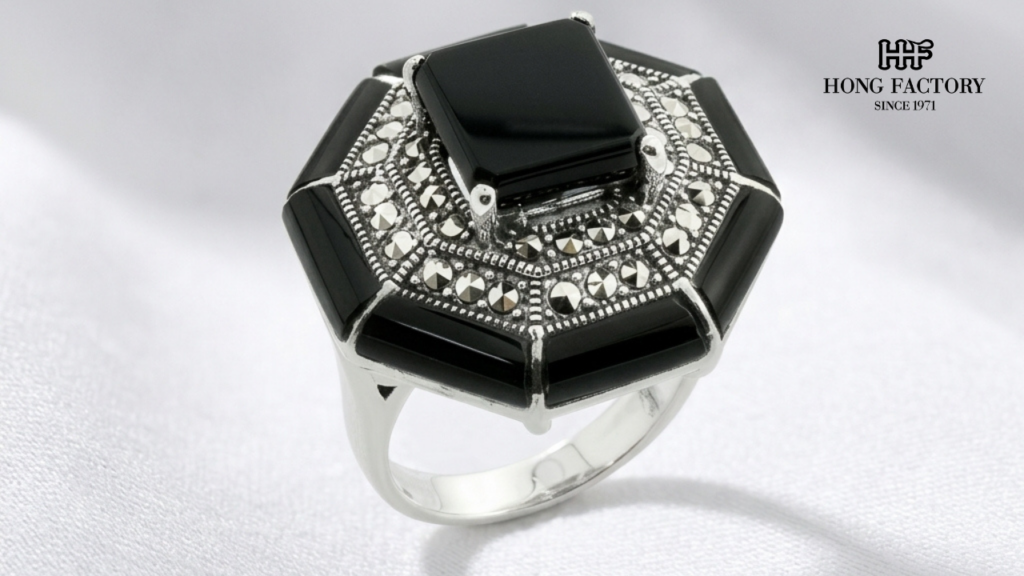
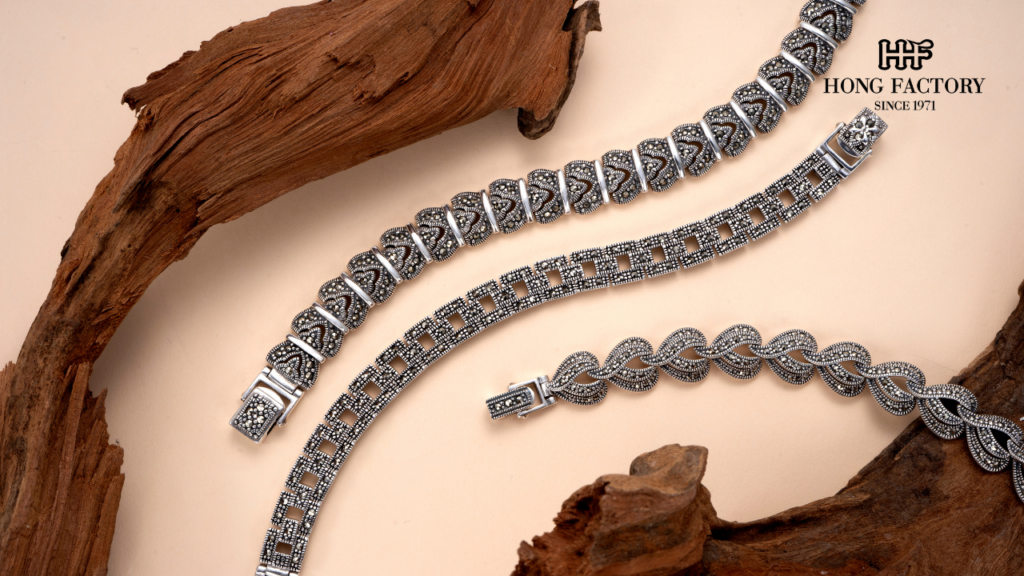
Art Deco (1920s–1930s) gave the world a visual language of geometric precision, symmetry, and the celebration of modern materials. In jewelry, it meant platinum and white gold, clean lines, and the integration of contrasting stones into architectural settings. Marcasite in sterling silver is ideally suited to Art Deco interpretation — the dark stones set into bright silver provide the tonal contrast the style demands, and the precise pavé-setting technique mirrors the period’s celebration of craftsmanship.
Hong Factory’s Art Deco-inspired designs — hexagonal cluster rings, chevron bangles, fan-shaped drop earrings, geometric pendant necklaces — are among our most consistent wholesale performers precisely because they carry historical authority. A customer who knows what Art Deco looks like recognises the design immediately; a customer who does not simply sees a beautiful, unusually detailed piece.
The Edwardian Influence
The Edwardian period (approximately 1900–1910) favoured filigree, delicate openwork, and floral lace-like patterns in silver and platinum. Translating this aesthetic into sterling silver and marcasite produces pieces of extraordinary delicacy — rings and pendants where the silver appears almost to dissolve into a fine lattice of stones and metal.
These designs are among the most technically demanding to produce and among the most striking to display. They occupy the premium tier of the antique silver jewelry range and carry retail prices that reflect their craft complexity.
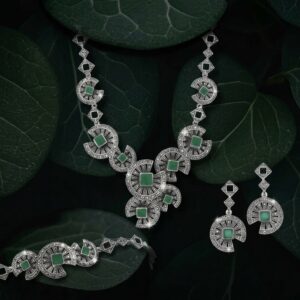
Gemstone Silver Jewelry: Thailand’s Unique Advantage
Gemstone silver jewelry — sterling silver pieces incorporating coloured stones — is one of the most commercially dynamic categories in the Thai wholesale market, and Bangkok’s position in the global gemstone trade is the primary reason.
Stone Variety and Accessibility
The range of stones available to Bangkok manufacturers for setting in silver is essentially unmatched anywhere in the world at comparable price points. Semi-precious stones in consistent sizes and grades — the standardised cabs, faceted rounds, and fancy cuts required for production jewelry — are available in virtually unlimited variety from suppliers within the city.
This means that when Hong Factory develops a new gemstone silver jewelry design, the stone selection process involves choosing from hundreds of options across colour, cut, size, and quality grade. Buyers who want to specify a particular stone for a custom order — “the same design but in labradorite instead of onyx” — will find Thai manufacturers far more responsive than those sourcing stones from more distant markets.
Popular Stone Combinations in 2026
Current wholesale demand patterns at Hong Factory reflect several strong gemstone preferences:
Labradorite — Its blue-grey iridescent flash pairs beautifully with marcasite’s dark metallic sparkle. Labradorite and marcasite pendants and rings are among the fastest-growing items in our current range.
Green onyx — A strong trend colour for 2026, green onyx in marcasite surrounds creates a rich, jewel-like effect that photographs extremely well for e-commerce.
Amethyst — The classic purple semi-precious stone never goes out of fashion in silver settings. Affordable, widely understood, and deeply giftable.
Mother-of-pearl — Soft, luminous, and romantic. MOP set in oxidised silver creates a compelling contrast that works across age demographics.
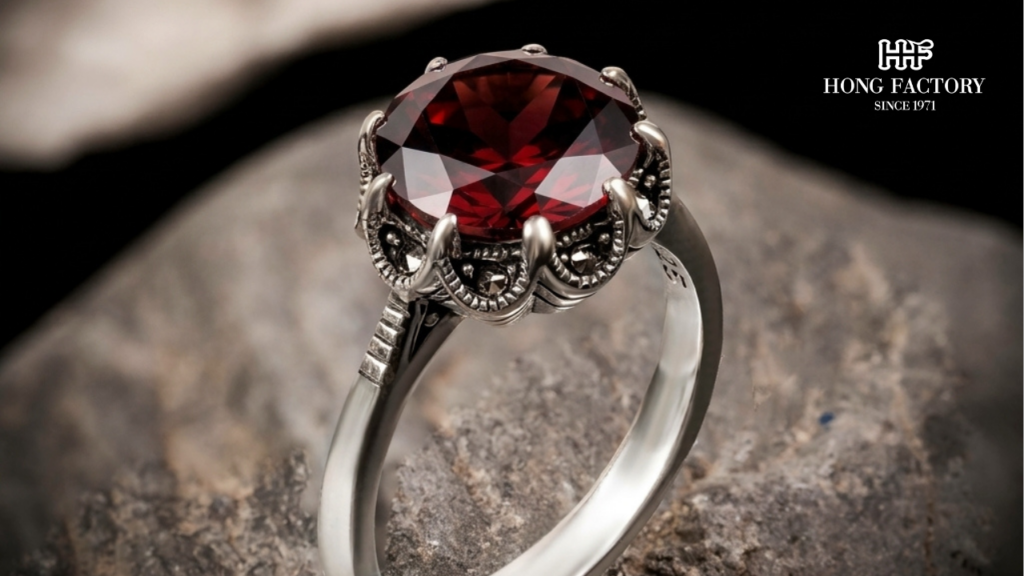
Garnet — Deep red garnet in silver settings is a perennial strong performer, particularly in autumn and winter buying seasons.
Turquoise — The combination of turquoise and sterling silver carries both Southwest American and vintage British design associations, giving it broad market reach.
Setting Techniques for Gemstone Silver Jewelry
The quality of a gemstone silver jewelry piece depends as much on the setting technique as on the stone itself. Common approaches in Thai silver production include:
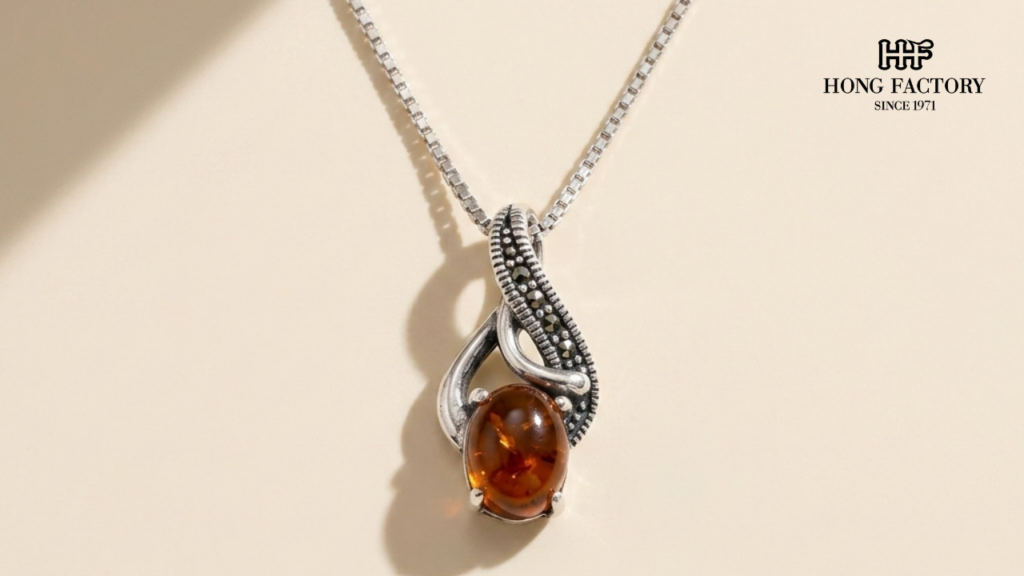
Bezel setting — A rim of silver surrounds the stone and is pressed down to secure it. Clean, secure, and particularly well-suited to cabochon (domed) stones. The most common setting for larger centre stones in marcasite and gemstone designs.
Claw (prong) setting — Small silver prongs grip the stone at its edges, maximising light entry and colour visibility. Common in faceted stones where brilliance is the priority.
Pavé setting — Dozens or hundreds of small stones set closely together with minimal metal visible. The defining technique of marcasite jewelry. At high quality, the surface appears to be entirely stone, with only tiny beads of silver visible between stones.
Flush (gypsy) setting — The stone sits level with the metal surface, pressed in flush. Clean, modern, and very secure. Common in lightweight contemporary designs.
How to Verify Quality When Sourcing Sterling Silver Jewelry from Thailand
For wholesale buyers evaluating suppliers, these are the non-negotiable quality indicators:
The 925 hallmark. It should be clearly stamped on every piece — typically on the inner shank of a ring, the reverse of a pendant, or the clasp of a bracelet. If it is absent, ask for documentary evidence of silver content. A reputable manufacturer will provide this without hesitation.
Weight. Genuine 925 sterling silver has a distinctive heft. Silver-plated pieces feel lighter than they look. If a piece feels insubstantial for its size, treat this as a warning sign.
Tarnish behaviour. 925 sterling tarnishes slowly and evenly over time with exposure to air and sulphur compounds. Silver-plated pieces tarnish at the plating edges and in setting recesses first, revealing the base metal. Ask for test samples and observe over several weeks.
Stone security. Apply gentle pressure to each stone with a fingernail. A quality piece should show zero movement. Any looseness indicates insufficient setting depth or poorly formed prongs.
Finish consistency. On oxidised pieces, the darkened areas should be even and clearly defined. Polished surfaces should be smooth with no tool marks or file scratches visible at normal viewing distance.
Factory transparency. Quality manufacturers welcome questions about their processes, materials, and quality control. Reluctance to share information about silver sourcing or manufacturing procedures is a meaningful signal.
Caring for 925 Sterling Silver Jewelry: Advice for Your Customers
Providing clear care guidance to your end customers reduces returns, builds trust, and increases the likelihood of repeat purchase. Key points:
Store properly. Sterling silver tarnishes faster in humid conditions and when exposed to sulphur compounds (present in some foods, rubber, and certain fabrics). Store pieces in anti-tarnish pouches or cloth-lined boxes.
Clean gently. A soft silver polishing cloth is sufficient for routine maintenance. For heavier tarnish, a silver dip solution is effective, but rinse thoroughly and dry completely. Avoid abrasive cleaners that scratch the surface.
Avoid contact with chemicals. Perfume, hairspray, chlorine (pools), and household cleaning products all accelerate tarnishing and can damage stone settings. Jewelry should be the last thing you put on and the first thing you take off.
Ultrasonic cleaners: use with caution. Ultrasonic cleaning is fine for plain silver but can loosen stone settings — particularly in pavé and marcasite pieces. Hand cleaning is safer for set pieces.
Wear it. Paradoxically, sterling silver that is worn regularly tarnishes more slowly than pieces left in storage. The oils in skin provide a degree of protection, and regular handling keeps the surface polished.
Frequently Asked Questions
What is the difference between 925 silver and silver-plated jewelry? 925 sterling silver is a solid alloy — the metal is the same composition throughout. Silver-plated jewelry has a thin silver coating over a base metal (usually brass or zinc). The coating wears away with use and exposure, revealing the base metal beneath. For wholesale jewelry intended for regular wear, 925 sterling is the only appropriate standard.
Does 925 silver from Thailand tarnish? All sterling silver tarnishes over time — it is a natural chemical reaction between silver and sulphur compounds in the environment. Thai sterling silver is no more prone to tarnishing than silver from any other origin. Proper storage and occasional polishing maintain the appearance of any 925 piece indefinitely.
How do I know if a Thai manufacturer is using genuine 925 silver? Ask for samples with visible 925 hallmarks and request documentation of silver sourcing. Reputable manufacturers provide material certificates as standard. At Hong Factory, every piece is hallmarked and we are happy to discuss our silver sourcing with wholesale buyers.
What is the minimum order for 925 sterling silver jewelry from Hong Factory? Ready stock orders start from USD 1,000, with pieces available for dispatch within a few days. Made-to-order and custom production starts from USD 2,000 with a minimum of 5 pieces per design and a 30–45 day production lead time.
Can I specify gemstones for custom silver jewelry orders? Yes. Our made-to-order service allows you to specify stone type, colour, size, and finish. Our team can advise on stone availability and appropriate setting techniques for any design in the catalogue.
Source 925 Sterling Silver Jewelry Direct from Bangkok
Hong Factory has produced 925 sterling silver and marcasite jewelry in Bangkok since 1971. Our collection of over 10,000 designs spans classic and antique-inspired styles, contemporary lightweight designs, and gemstone silver jewelry across rings, earrings, necklaces, bracelets, and brooches.
Ready stock is available for immediate order. Custom and made-to-order production is available with your choice of stone, size, and finish.



Jewelry Blog
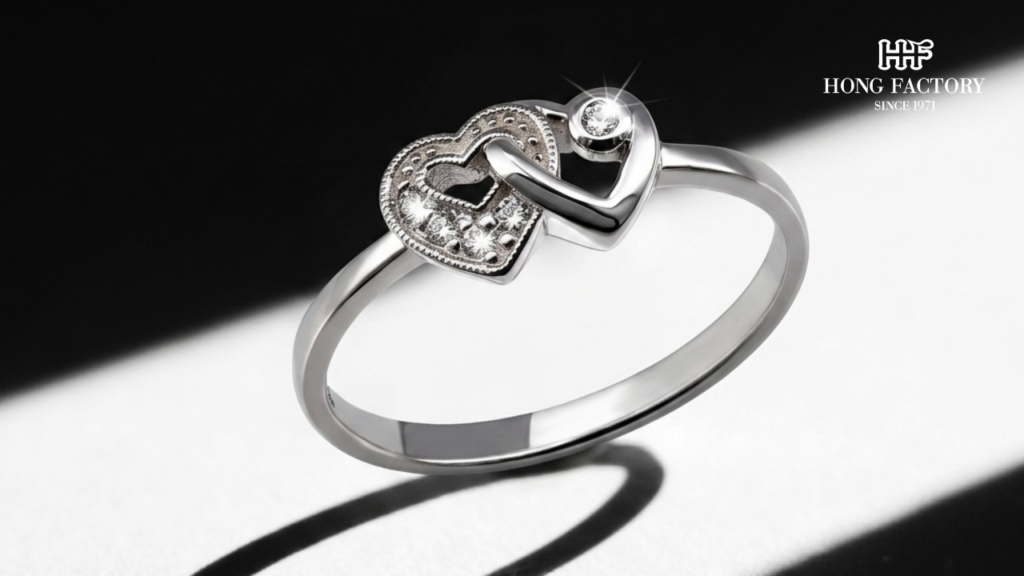
Jewelry Shapes and Their Meanings: A Complete Guide
Jewelry shapes are more than decorative details. Circles, hearts, [...]
Sep

What Causes Sterling Silver Jewelry to Tarnish?
Sterling silver jewelry tarnishes when the metal reacts with [...]
Sep
Why Rhodium Plating Is Used on Sterling Silver Jewelry
Rhodium plating is applied to sterling silver jewelry to [...]
Sep
Why Sterling Silver 925 Is Popular for Jewelry Manufacturing
Sterling silver 925 is one of the most widely [...]
Sep
Inside a Jewelry Factory: How Sterling Silver Jewelry Is Made
Sterling silver jewelry may look delicate and effortless, but [...]
Sep
Garnet Gemstone: Meaning, Colors and Jewelry Guide
Garnet is a popular gemstone family known for its [...]
Sep
Citrine Gemstone: Meaning, Color and Jewelry Guide
Citrine is a popular gemstone known for its warm [...]
Sep
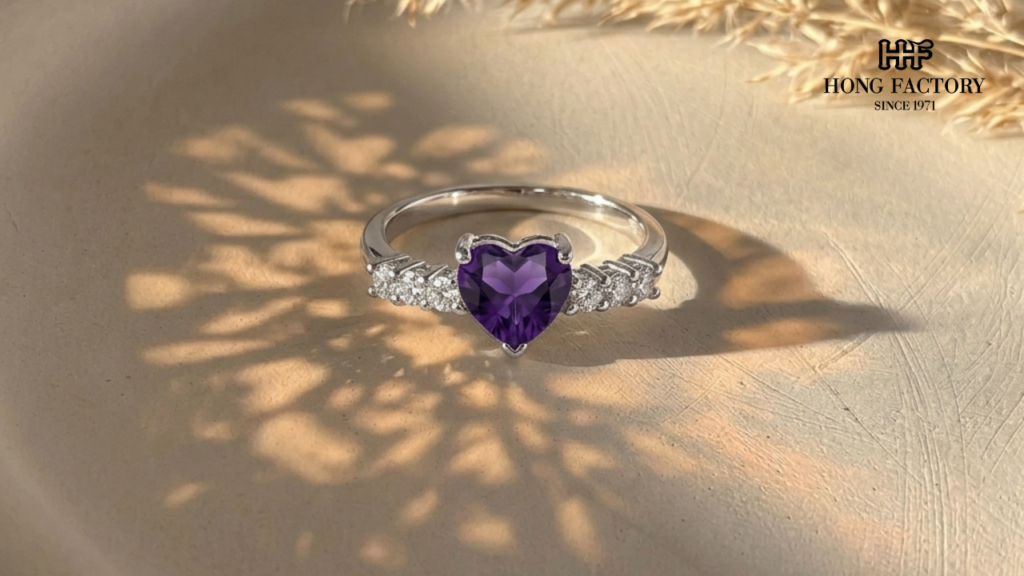
Amethyst Gemstone: Meaning, Color and Jewelry Guide
Amethyst is a popular gemstone known for its beautiful [...]
Sep