
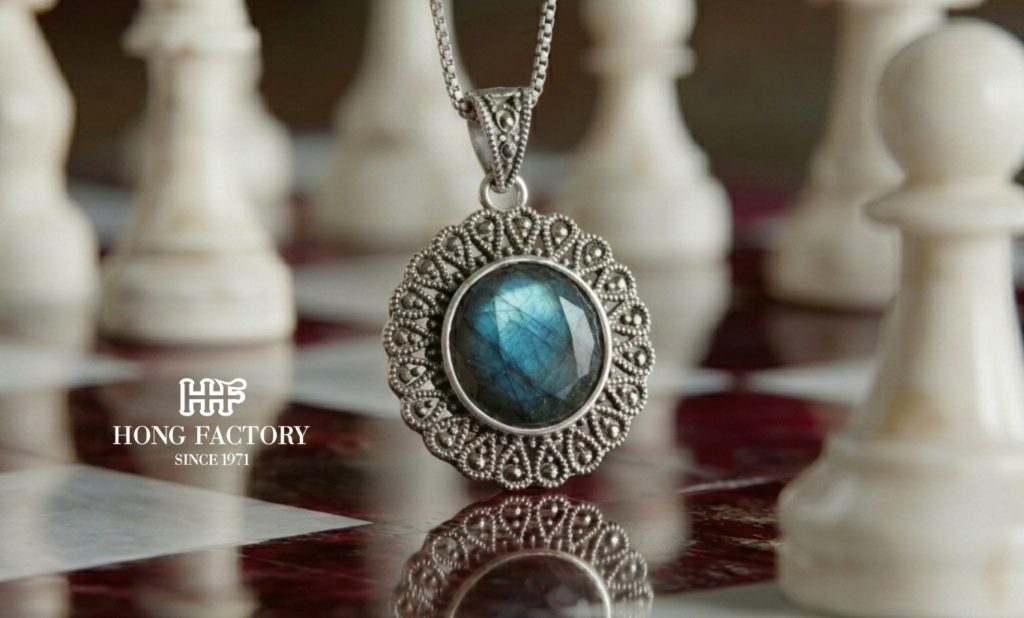
After years in which the dominant aesthetic conversation in jewelry centred on metal, form, and the cool interplay of silver and shadow, 2026 has introduced a new and insistent variable: the coloured stone. Not as a background detail or a birthstone accent but as a primary design element, the chromatic heart around which a piece is built and from which it derives its essential character.
Walk through any well-curated boutique jewelry section this season and you will see it. The labradorite pendant that catches blue-grey light from across the room. The deep garnet cluster that makes the hand wearing it look as though it is carrying a small piece of stained glass. The green onyx ring, the turquoise drop earring, the amethyst collar that turns a simple dress into a considered statement.
This is gemstone silver jewelry in its 2026 form: not the muted, conservative stone-plus-silver of previous decades, but something more confident, more chromatic, and more commercially significant than any other jewelry category currently entering boutiques.
Here is why it is happening, what is selling, and how to build a gemstone silver range that will define your boutique’s aesthetic for the next several years.
Why Coloured Gemstones Are Having Their Moment in 2026
The Reaction Against Uniformity
The jewelry market spent a significant period in the 2010s and early 2020s consolidating around a relatively limited visual palette — yellow gold, delicate chains, tiny diamonds, minimalist forms. The aesthetic was beautiful in its restraint and commercially successful in its accessibility. It also became, over time, ubiquitous. When every boutique carries the same thin gold chain and the same pavé band, the differentiation that boutique retail depends on begins to erode.
Coloured gemstone silver jewelry is the market’s response to this uniformity — and it is a response of genuine substance rather than superficial novelty. A labradorite ring is immediately distinct. A garnet and marcasite pendant necklace carries a visual identity that no thin gold chain can approach. The colour dimension adds a specificity and character to silver jewelry that pure silver or diamond alternatives cannot replicate.
Bangkok’s Unique Advantage Creates a Unique Opportunity
No discussion of the gemstone silver jewelry trend is complete without acknowledging the structural advantage that Thai manufacturers bring to this category, and why that advantage matters specifically in 2026.
Bangkok is one of the world’s primary gemstone trading and processing hubs. Rubies, sapphires, garnets, topaz, labradorite, onyx, turquoise, mother-of-pearl, and dozens of semi-precious varieties are traded and processed in the city in volumes and at price points that no manufacturer in Europe or North America can access. This proximity creates a supply chain that is faster, more diverse, and more economically efficient than any alternative.
For buyers sourcing 925 silver jewelry from Thailand, this means access to a broader range of stone options, more consistent quality grading, and more responsive supply than sourcing from manufacturers in other regions. When a stone colour becomes commercially relevant — when labradorite’s iridescent flash starts appearing in fashion editorial and buyers begin requesting it — a Bangkok manufacturer can respond within a season rather than over multiple production cycles.
This structural advantage is not new. But the 2026 gemstone trend amplifies its commercial significance to a degree that makes Thailand’s position in this category more important than at any previous moment.
The “Colour as Self-Expression” Shift
A deeper cultural shift is also at work. The jewelry customer of 2026 is, in significant measure, a customer who has moved beyond the idea that fine jewelry should be neutral and accessories should carry colour. The boundary between the two has dissolved.
Coloured gemstone silver jewelry sits in the space where this dissolution has happened most fully. A labradorite pendant in 925 sterling silver is not a fashion accessory with a limited lifespan. It is a piece of genuine quality, made with real craft, carrying real material value — that also happens to be profoundly, beautifully coloured. It does not compromise between permanence and expressiveness. It achieves both simultaneously.
This is the customer insight that powers the 2026 gemstone silver trend: customers who want the quality signals of fine jewelry and the expressive capacity of colour, and who have discovered that sterling silver jewelry from Thailand in the gemstone category delivers exactly this combination.
The Stone Guide: What Is Selling and Why
Understanding the commercial profile of each major stone category in the 2026 market helps buyers make better range decisions. Here is the complete picture of what is performing, and the reasons behind the performance.
Labradorite: The Stone of the Moment
Labradorite is the undisputed stone story of 2026 in gemstone silver jewelry. Its rise from specialist favourite to mainstream desire has been rapid, and the reasons are compelling.
The visual phenomenon at labradorite’s heart — labradorescence, the iridescent play of blue, gold, and green light that moves across the stone’s surface as the viewing angle changes — is unlike any other semi-precious stone. It cannot be adequately described in words and does not photograph fully. It has to be experienced in person, which makes labradorite jewelry one of the most effective in-store conversion pieces available.
A customer who picks up a labradorite and marcasite pendant and holds it at different angles will almost invariably buy it. The stone does the selling.
Why labradorite works with silver and marcasite: The grey-blue ground colour of labradorite is tonally related to the oxidised silver of marcasite settings. The two materials exist in the same cool, slightly mysterious colour register — which means labradorite in a marcasite surround feels harmonious rather than contrasted. When the labradorescent flash activates, it provides the colour moment that surprises within an otherwise tonal composition.
Best design applications: Oval or round cabochon pendants, drop earrings, cocktail rings with a substantial centre stone, and mixed labradorite/marcasite pavé pieces that use the stone as an irregular focal element within a geometric design.
Customer profile: Design-literate, aged 28–50, drawn to materials with geological interest and visual complexity. High repeat purchase rate — customers who discover labradorite tend to collect it.
Garnet: The Enduring Classic
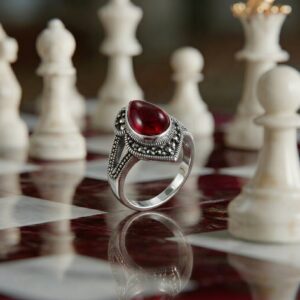
Garnet is the stone with the longest commercial history in the sterling silver jewelry Thailand tradition, and its 2026 performance reflects a perennial truth: deep red in silver is one of the most universally appealing stone-metal combinations available.
The chromatic contrast — warm red against cool silver — creates immediate visual warmth that broader trends cannot diminish. Garnet has the cultural associations (passion, energy, depth, winter warmth) and the birthstone significance (January) that make it permanently relevant for gift occasions. And the visual weight of deep red garnet in an oxidised silver setting has an antique richness that resonates powerfully with the vintage and Art Deco aesthetics that define the current moment.
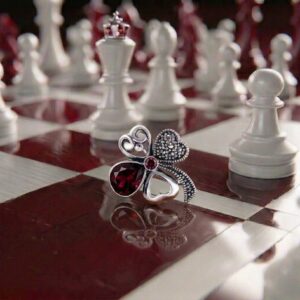
Why garnet works with silver and marcasite: The warm deep red of garnet is complementary to the cool dark silver-grey of marcasite — the two materials create a colour tension that is resolved rather than dissonant. The result is a piece that has warmth without softness, richness without heaviness.
Best design applications: Victorian floral cluster designs with garnet centres surrounded by marcasite petals, Art Deco geometric rings with garnet and marcasite combinations, pendant necklaces with garnet focal stones in marcasite surrounds.
Commercial profile: Strongest gift performance of any coloured stone. Seasonal peak at Christmas and Valentine’s Day, but consistent throughout the year. Broadest demographic appeal of any stone in the range — it sells to customers from 20 to 80.
Green Onyx: The 2026 Colour Story
Green is the fashion colour of 2026, and in gemstone silver jewelry its expression is green onyx — a deep, saturated emerald-like green that photographs extraordinarily well and has a richness and depth that more muted green stones cannot match.
Green onyx does not have the centuries of jewelry tradition that garnet and amethyst carry. Its commercial strength in 2026 is more directly fashion-driven — a response to the green dominance in clothing, accessories, and interiors that has characterised the season. This makes it a trend piece with trend-piece dynamics: strong now, potentially less dominant in future seasons as the fashion colour conversation moves on.
For boutique buyers, this means treating green onyx as a significant but time-limited opportunity — building stock now to capture the peak demand, while avoiding over-investment that creates inventory risk if the fashion colour shifts.
Why green onyx works with silver and marcasite: The rich, saturated quality of green onyx against oxidised silver creates a jewel-like intensity — as though you are looking at something that should cost considerably more than it does. The contrast between the luminous green and the dark silver-grey reads as both contemporary and historically resonant.
Best design applications: Geometric settings that give the stone maximum visual exposure — bezel-set cocktail rings, drop earrings with a substantial oval or round stone, statement pendant necklaces where the green onyx is the primary visual element.
Commercial profile: Strong impulse purchase dynamic — the green is immediately striking. Best for boutiques with a younger, fashion-forward customer base and a strong social media presence.
Amethyst: The Reliable Foundation
Amethyst is the broadest-appeal semi-precious stone in the 925 silver jewelry Thailand range — and in 2026, it remains exactly that: the stone with the most consistent commercial performance across demographics, occasions, and market types.
The purple-to-violet colour range of amethyst is widely loved and widely understood. The February birthstone association gives it consistent gift occasion relevance. The price point — amethyst sits at the accessible end of the semi-precious stone market — keeps the finished piece within the range of impulse and casual gift purchase. And the combination of amethyst’s purple warmth with the cool precision of silver and marcasite creates a visual balance that sells year-round without requiring the customer to be in a particular seasonal or occasion mood.
Amethyst is not the most exciting stone in the 2026 gemstone story. It is the most reliable. For buyers building a gemstone silver range that needs to perform consistently across twelve months rather than spike and drop, amethyst is an essential foundation.
Best design applications: Floral cluster designs with amethyst centres and marcasite petals, simple bezel-set pendants on fine chains, stacking rings with small amethyst accents, earring studs with amethyst centres in geometric silver settings.
Commercial profile: The gift default — when a customer wants something beautiful, meaningful, and appropriate without being too specific, the amethyst and silver piece is the answer. Highest unit velocity of any coloured stone in the range.
Mother-of-Pearl: The Quiet Luxury Stone
Mother-of-pearl — the iridescent organic material produced by molluscs — is having a significant moment in 2026, driven by its alignment with the soft, luminous aesthetic quality that the quiet luxury trend celebrates at its most romantic.
Where labradorite’s iridescence is dark and mysterious, MOP’s iridescence is soft and light — pale, creamy, with a gentle play of pink, white, and gold across its surface. It creates jewelry that reads as delicate and feminine without being frivolous — the iridescence gives it depth, and the marcasite surround gives it the craft quality that separates it from cheaper pearl-effect alternatives.
Why mother-of-pearl works with silver and marcasite: The luminous pale quality of MOP against dark oxidised silver creates a contrast as visually compelling as a positive-negative graphic composition. The pale stone glowing within a dark frame is one of the most striking combinations available in the sterling silver jewelry Thailand tradition.
Best design applications: Oval and round cabochon settings in pendant necklaces, Art Deco geometric designs where MOP is used as the primary stone in place of other gems, large drop earrings where the stone’s soft luminosity creates an elegant facial frame.
Commercial profile: Strongest in spring and summer buying seasons. Significant appeal to the romantic, soft-styling customer who wants luxury warmth without gold. Growing presence in bridal and occasion jewelry as an alternative to pearl.
Turquoise: The Heritage Stone
Turquoise carries two distinct cultural associations that together give it broader market reach than most semi-precious stones. The Southwest American tradition — turquoise set in silver, drawing on Navajo and Pueblo metalwork traditions — has maintained a devoted following that cycles in and out of mainstream fashion. The British vintage tradition — turquoise as a Victorian and Edwardian favourite in silver settings — connects the stone to the antique silver aesthetic that is central to the current moment.
In 2026, both associations are commercially relevant, and turquoise’s solid teal-to-sky-blue colour provides a chromatic freshness that distinguishes it clearly from the warmer and darker stones in the range.
Best design applications: Casual lifestyle pieces — simple pendants, small drop earrings, lightweight stacking rings — that suit the stone’s relaxed, natural quality. Also effective in Art Nouveau-inspired organic settings where the stone’s natural colour variation contributes to the organic character of the design.
Commercial profile: Strong in lifestyle boutiques, resort retail, and outdoor-oriented markets. Consistent performer in markets with a connection to Southwestern American aesthetic traditions. Seasonal peak in spring and summer.
Blue Topaz: The Diamond Alternative
Blue topaz — particularly the deep London Blue and Swiss Blue varieties — is the stone for customers who want the visual impact of a significant blue gemstone without the sapphire price point. Its strong, clear blue colour and its good refractive quality give it a brilliance that most other semi-precious stones do not match.
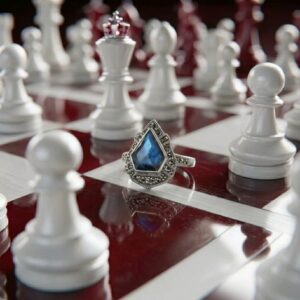
In gemstone silver jewelry, blue topaz functions as the premium stone — the option for customers whose taste runs to clearer, more brilliant colour rather than the organic and complex alternatives. It suits geometric and architectural settings — Art Deco forms that benefit from the stone’s clear colour and defined facets.
Best design applications: Bezel-set cocktail rings in geometric frames, pendant necklaces with Art Deco-inspired surrounds, drop earrings where the stone’s brilliant colour provides the primary visual element.
Commercial profile: Strong premium-tier performance. Highest average retail price of the standard stone range. Best for boutiques with a customer base willing to invest in higher price points for distinctive colour.
Building a Gemstone Silver Range: The Strategic Approach
Understanding the individual stones is necessary but not sufficient. The commercial opportunity in gemstone silver jewelry is built at the range level — across multiple stones, multiple designs, and multiple price points, arranged to serve different customers and different occasions.
The Foundation Stones
Begin with the stones that have the broadest appeal and the most consistent commercial performance across seasons and demographics. These are the range anchors — always in stock, always performing.
Amethyst: The universal performer. Stock deep and reorder consistently.
Garnet: The gift stone. Stock across earrings, pendants, and rings for maximum gift occasion coverage.
Mother-of-pearl: The soft luxury option. Ensures the range has feminine warmth alongside the more dramatic stones.
Together, these three foundation stones cover the gift occasion calendar, the broadest demographic range, and the three primary aesthetic registers — warm, rich, and luminous.
The Trend Stone
Add one trend stone per buying cycle — the stone that reflects the current fashion conversation and provides the range’s “of the moment” dimension.
In 2026, that stone is labradorite. Its commercial performance, social media shareability, and fashion relevance make it the clear choice for buyers who want their range to feel current rather than simply consistent.
Treat the trend stone with appropriate inventory caution: stock enough to capture the demand peak, but not so heavily that a fashion shift leaves you with excess inventory. The trend stone should represent approximately 15–20% of the total gemstone range by SKU count.
The Colour Story Stone
A seasonal colour story stone — chosen to reflect the dominant fashion colour conversation of the current season — provides the range’s most time-sensitive commercial opportunity and requires the most careful inventory management.
In 2026, that stone is green onyx. Its alignment with the green fashion moment gives it strong impulse purchase dynamics that justify its presence in the range despite its trend-dependent commercial profile.
The Premium Stone
Include one premium stone at the upper tier of your price range — the option for customers who want to invest more and expect a corresponding increase in visual impact and material value.
Blue topaz is the natural choice for 2026’s gemstone silver range. Its clear brilliant colour, its geometric compatibility with Art Deco settings, and its accessible-luxury price positioning make it the premium tier anchor.
Range Depth vs. Range Breadth
A common mistake in building gemstone jewelry ranges is chasing breadth — stocking every stone in every design — at the expense of depth. A range of 12 designs in 4 stones, with adequate depth per SKU, will outperform a range of 40 designs in 10 stones where each design is represented by 2–3 units.
Depth provides replenishment security, reduces out-of-stock risk at gift occasions, and creates the display density that makes a category feel credible and curated. Build depth in your foundation stones and selected commercial designs before expanding the stone range.
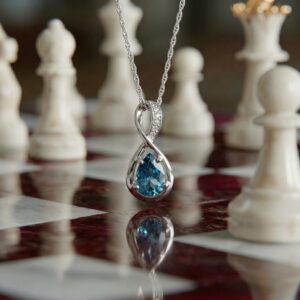
Displaying Gemstone Silver Jewelry Effectively
The visual merchandising of gemstone silver jewelry benefits from different principles than plain silver display, because colour introduces a new variable — the relationship between stone colours within a display arrangement — that plain silver does not present.
The Colour Composition of the Display
Arrange gemstone silver pieces to create colour compositions within the display — warm tones (garnet, amethyst) on one side, cool tones (labradorite, blue topaz, turquoise) on the other, with mother-of-pearl and green onyx used as transitional elements.
This arrangement has two benefits: it makes each stone’s colour identity clearer by giving it like-toned neighbours, and it creates a visually satisfying display composition that draws the eye across the entire section rather than fixing on a single focal point.
Lighting for Colour
Warm LED lighting (2700–3000K) brings out the warmth of garnet and amethyst most effectively. Cool white lighting (4000K+) shows labradorite and blue topaz at their best. A warm default with a cool accent — a single focused cool light source directed at the labradorite section — tends to serve the complete range most effectively.
For labradorite specifically, directional lighting is essential. The labradorescent effect requires light to hit the stone from a specific angle. A fixed display arrangement that positions labradorite pieces in the optimal orientation relative to the display lighting maximises the stone’s most distinctive quality.
Storytelling at the Point of Sale
Gemstone silver jewelry is one of the most naturally storytellable categories in any boutique. Every stone has a geological origin story, a cultural history, and a set of associations that customers find genuinely interesting.
Point-of-sale cards with brief stone descriptions — the geological origin of labradorite, the Victorian history of garnet in silver settings, the cultural significance of turquoise — transform the browsing experience and provide retail staff with the conversation starters that drive conversion.
Caring for Gemstone Silver Jewelry
Different stone types require slightly different care approaches, which makes care guidance an important part of the customer conversation for gemstone silver pieces.
Universal principles: Remove before bathing, swimming, and exposure to household chemicals. Store individually to prevent scratching between stones. Clean silver elements gently with a polishing cloth.
Soft stones (turquoise, mother-of-pearl, labradorite): These stones are relatively soft and can be scratched by harder materials. Store separately and clean with a very soft, barely damp cloth. Avoid ultrasonic cleaning entirely — vibration can damage soft stones and the adhesive used in some settings.
Hard stones (garnet, amethyst, blue topaz, green onyx): More robust and less susceptible to scratching. Standard silver jewelry care applies. Gentle cleaning in mild soapy water is safe for most hard stone settings; rinse thoroughly and dry completely.
Organic materials (mother-of-pearl): Avoid prolonged water exposure and all chemicals including perfume. MOP can absorb liquids and chemicals that alter its appearance permanently.
Frequently Asked Questions
What makes Bangkok’s gemstone supply chain better for silver jewelry buyers? Bangkok’s position as a global gemstone trading hub means manufacturers can access a wider range of stone types, sizes, and quality grades than manufacturers in other regions — at faster response times and more competitive pricing. For buyers who want specific stone colours for custom or made-to-order orders, Bangkok’s gemstone market offers options that are simply unavailable elsewhere at comparable price points.
Can I specify custom stone colours for made-to-order gemstone silver jewelry? Yes. Hong Factory’s made-to-order service allows you to specify stone type, colour, quality grade, and size for any design in our catalogue. Our wholesale team can advise on stone availability and compatibility with specific designs.
Which gemstones are most appropriate for everyday wear? Garnet, amethyst, blue topaz, and green onyx are all durable enough for everyday wear in silver settings. Labradorite, turquoise, and mother-of-pearl are softer stones that benefit from more careful wear habits — removing before physical activity and cleaning more gently.
What is the minimum order for gemstone silver jewelry from Hong Factory? Ready stock orders start from USD 1,000 with no per-design minimum. Made-to-order production starts from USD 2,000 with a minimum of 5 pieces per design and a 30–45 day lead time.
How do I stay current on which gemstones are performing commercially? The best indicators are trade show conversations, wholesale buyer reorder patterns, and fashion editorial coverage. Our wholesale team tracks demand patterns across our buyer network and can advise on which stone categories are showing the strongest commercial momentum at any given time.
Discover the Colour Potential of Thai Silver
Hong Factory has been producing gemstone silver jewelry in Bangkok since 1971. Our access to Bangkok’s gemstone market, our craftspeople’s mastery of stone setting in 925 silver jewelry Thailand, and our collection of over 10,000 designs — many of which incorporate coloured stones in settings developed over decades — make us one of the most capable sources for the gemstone silver category in the wholesale market.
Ready stock orders from USD 1,000. Made-to-order production with your choice of stone, size, and finish from USD 2,000.



Jewelry Blog
Jewelry Shapes and Their Meanings: A Complete Guide
Jewelry shapes are more than decorative details. Circles, hearts, [...]
Sep

What Causes Sterling Silver Jewelry to Tarnish?
Sterling silver jewelry tarnishes when the metal reacts with [...]
Sep
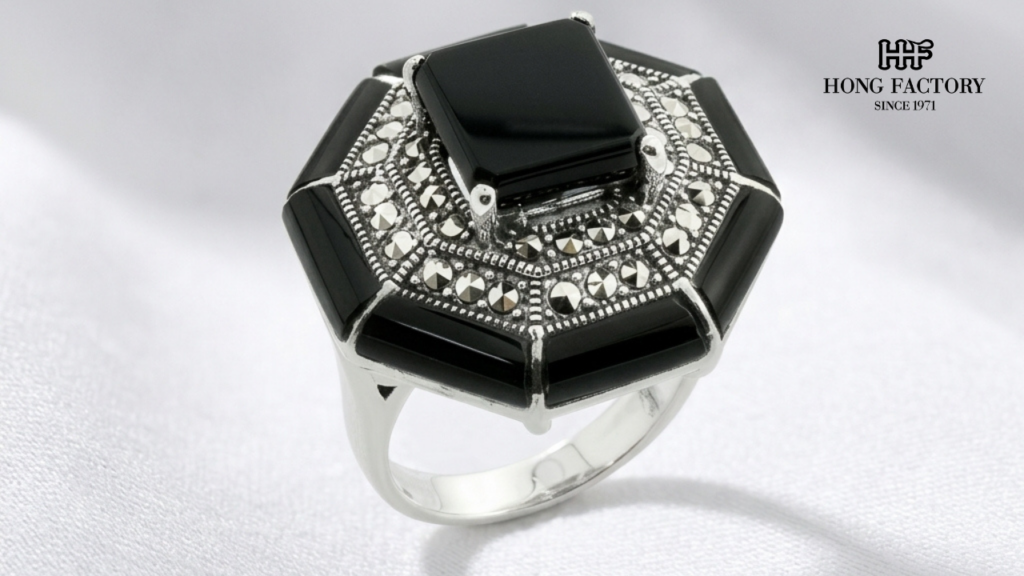
Why Rhodium Plating Is Used on Sterling Silver Jewelry
Rhodium plating is applied to sterling silver jewelry to [...]
Sep
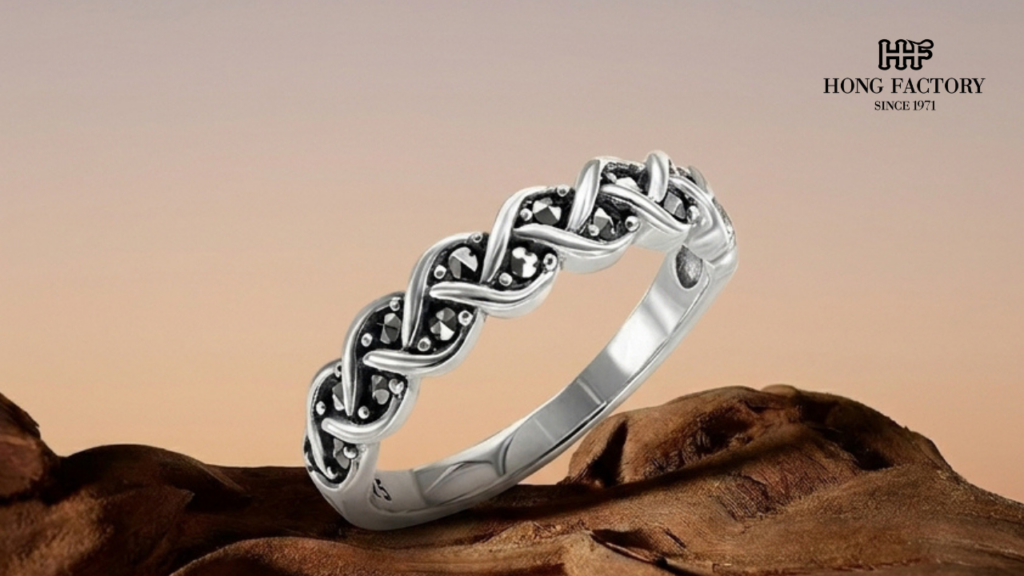
Why Sterling Silver 925 Is Popular for Jewelry Manufacturing
Sterling silver 925 is one of the most widely [...]
Sep
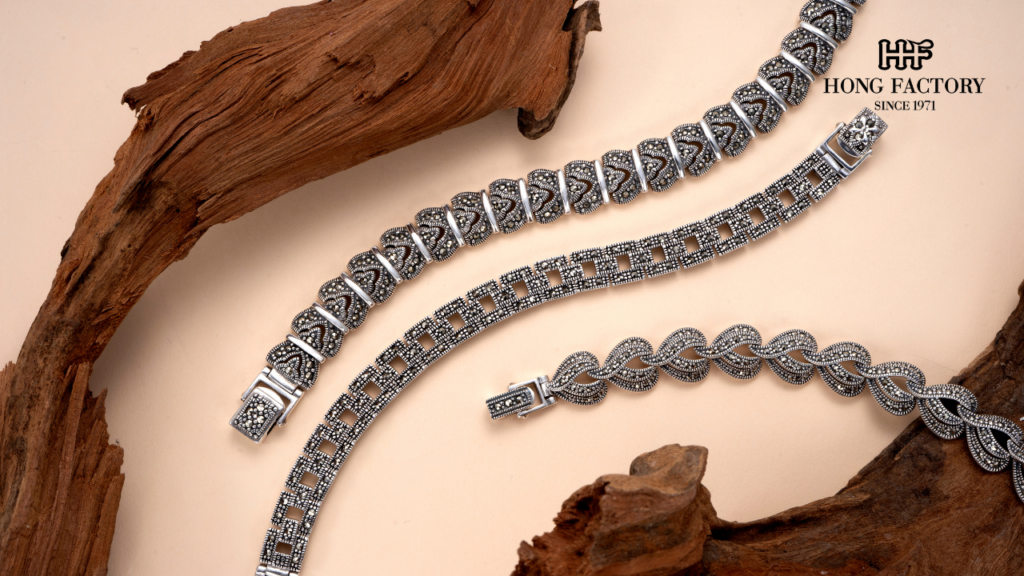
Inside a Jewelry Factory: How Sterling Silver Jewelry Is Made
Sterling silver jewelry may look delicate and effortless, but [...]
Sep
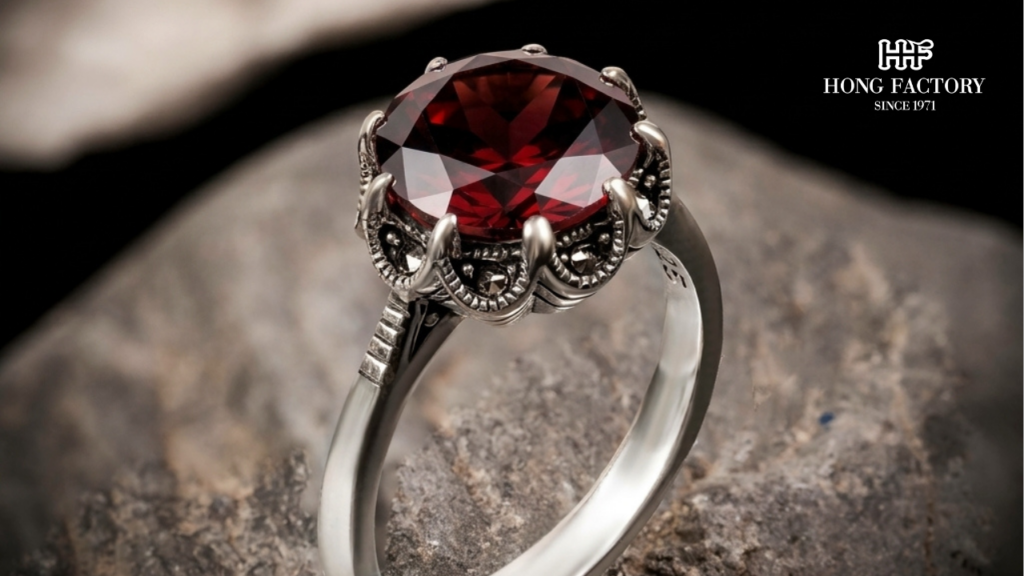
Garnet Gemstone: Meaning, Colors and Jewelry Guide
Garnet is a popular gemstone family known for its [...]
Sep
Citrine Gemstone: Meaning, Color and Jewelry Guide
Citrine is a popular gemstone known for its warm [...]
Sep
Amethyst Gemstone: Meaning, Color and Jewelry Guide
Amethyst is a popular gemstone known for its beautiful [...]
Sep