
It is not because the pieces are large — some of them are quite small. It is not because the stones are precious — you cannot always tell what they are. It is because the pieces look as though they have a history. As though they were not bought last Tuesday from a trend-driven retailer but inherited from someone with impeccable taste, or discovered in a small shop on a side street by someone who knew exactly what they were looking at.
That quality — the quality of jewelry that appears to have existed before the person who is wearing it — is the essence of what has come to be called the old money aesthetic. And antique silver jewelry, particularly vintage marcasite jewelry from Thailand, embodies it more completely than almost anything else available in the contemporary market.
This is not a coincidence. It is the logical consequence of what marcasite jewelry is, where it comes from, and what it has always communicated about the person wearing it.
What the Old Money Aesthetic Actually Means
Beyond the Meme
The old money aesthetic became a significant cultural moment in the early 2020s and has only deepened its influence since. As a visual concept, it is characterised by restraint, quality, heritage, and the studied absence of obvious effort or conspicuous expenditure. The old money look does not announce itself. It accumulates authority through specificity — the right cut, the right material, the right object in the right context — without ever appearing to try.
In its social media iteration, the old money aesthetic became associated with a particular visual vocabulary: linen and cashmere in neutral tones, leather goods with visible patina, books and classical architecture, horses and old European hotels. It was, in part, an aesthetic reaction against the aggressive logo-display and obvious luxury branding of the preceding decade.
But the old money aesthetic is not new. It describes an approach to personal presentation that has existed as long as there have been people with sufficient confidence to choose quality over display. The core principle — that truly refined taste expresses itself through restraint, through chosen materials and objects with genuine provenance, through things that reward close attention more than distant impression — is centuries old.
Antique silver jewelry predates the aesthetic by centuries. The people who developed and refined the marcasite and sterling silver jewelry tradition — the Swiss and French craftspeople of the 18th century, the Victorian and Edwardian jewelry houses, the Bangkok silversmiths who carried the tradition into the modern era — were not making jewelry for people who wanted to show off their wealth. They were making jewelry for people who wanted beautiful objects with genuine craft value, designed to be worn for a lifetime and passed down to the next generation.
That is old money in its most fundamental expression. And it is exactly what vintage marcasite jewelry offers today.
Quiet Luxury vs Loud Luxury: The Distinction
Loud luxury announces itself immediately and at distance. A large diamond solitaire, an obvious designer logo, a piece of jewelry specifically designed to be identified by anyone with passing knowledge of a luxury brand — these are the vocabulary of loud luxury. They communicate spend. They communicate access. They are designed to be read by strangers.
Quiet luxury communicates something different. It communicates taste — which is not the same as money, though the two have been confused for centuries. A person wearing a beautifully made Art Deco marcasite ring is not announcing their net worth. They are announcing their aesthetic judgment: that they prefer craft to carats, historical depth to contemporary branding, objects that reward scrutiny to objects that perform at distance.
The quiet luxury customer is not wearing 925 silver jewelry from Thailand because they cannot afford diamonds. Many of them can. They are wearing it because they have made a considered aesthetic choice — and that considered choice is, in its own way, a more sophisticated communication than anything a designer label can offer.
The Historical Authority of Marcasite as a Luxury Material
Before Diamonds Were the Default
A historical fact that the contemporary diamond industry prefers not to publicise: diamonds did not become the default luxury jewelry choice until the 20th century, and their cultural dominance was established largely through one of the most successful advertising campaigns in history — De Beers’ “A Diamond Is Forever,” launched in 1947.
Before that campaign, and certainly before the industrial production of cut diamonds made them broadly accessible, the jewelry worn by people of taste and wealth was far more varied. Pearls. Coloured gemstones. Enamelled gold. And, for those who appreciated its particular qualities: marcasite in silver.
In 18th-century Europe, when sumptuary laws restricted diamond wear to the aristocracy, marcasite became the material of choice for the educated, design-literate middle and upper-middle classes — people who could have obtained diamonds through various means but chose the more aesthetically interesting alternative. The Swiss and French craftspeople who produced this antique silver jewelry were not making second-tier substitutes. They were making pieces that required more skill to produce than most diamond settings of the era, and that appealed to customers who valued that skill.
The Victorian era deepened this tradition. Marcasite in silver became associated with specific emotional occasions — engagements, mourning, significant anniversaries — giving it layers of meaning that purely decorative diamond jewelry did not carry. A Victorian marcasite locket or mourning ring was not a substitute for something else. It was precisely the right object for its purpose.
This historical depth gives vintage marcasite jewelry an authenticity that contemporary luxury brands cannot manufacture. It existed before it was fashionable. It will exist after the current trend has moved on. That permanence is, in itself, a form of luxury.
The Art Deco Legacy
The Art Deco period of the 1920s and 1930s was perhaps the highest expression of the principle that true luxury lies in design quality rather than material cost. The great Deco jewelry designers — Cartier, Van Cleef & Arpels, Boucheron — worked in platinum and diamonds, yes. But the defining quality of their work was not material value. It was design intelligence: the geometric precision, the integration of contrasting materials, the celebration of the machine aesthetic while maintaining hand-craft quality.
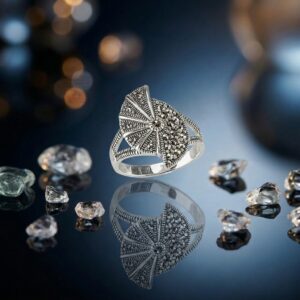
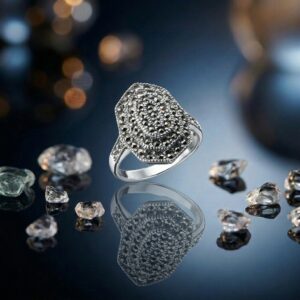
Bangkok’s Thai silversmiths translated this Deco design intelligence into silver and marcasite — making the Deco aesthetic accessible without sacrificing its essential quality. An Art Deco marcasite hexagonal cluster ring from Hong Factory is not a low-cost version of a Cartier piece. It is an expression of the same design tradition, executed in a different material register, by craftspeople with genuine mastery of their medium.
For the old money aesthetic, this lineage matters. A piece that belongs to the Art Deco tradition carries the cultural authority of that tradition. It does not need a logo to communicate its heritage. The design communicates it directly to anyone with the visual literacy to read it — which is precisely the audience the old money aesthetic is intended for.
The Materials: Why 925 Silver Is the Right Choice
The Aristocracy of Silver
Gold has always been the metal of obvious wealth. Silver has been the metal of taste.
This is a simplification, but it contains a truth. Throughout European jewelry history, silver was associated with refinement and restraint in a way that the warmth and visibility of gold was not. The great silversmiths of the 17th and 18th centuries — working in London, Paris, Amsterdam, and later in the workshops of Bangkok — were producing objects whose primary quality was craft, not material cost. The value was in the making, not the metal.
925 silver jewelry from Thailand carries this tradition directly. The 925 hallmark — 92.5% pure silver, alloyed for strength — is the international standard for quality silver jewelry, and it is the standard to which Hong Factory has produced every piece since our founding in 1971. It is not a material compromise. It is the material that the craft tradition requires.
For the old money aesthetic, the choice of silver over gold is not a cost decision. It is an aesthetic declaration: I prefer precision to warmth, restraint to richness, the cool intellectual quality of silver to the accumulated associations of gold. This is a sophisticated preference — and it is the preference that makes 925 silver jewelry from Thailand the natural choice for this aesthetic.
The Oxidised Finish: Patina as Value
One of the defining qualities of old money objects is patina — the evidence of age, use, and accumulated experience that gives objects their particular depth of character. A well-worn leather briefcase. A dining table with generations of use visible in its surface. Silver that has developed its tarnish and been polished back, repeatedly, over decades.
The oxidised finish of Thai marcasite jewelry replicates this patina quality intentionally. The darkened recesses of an oxidised silver piece look as though they have accumulated their depth over years of wear — the silver retiring into shadow in the protected spaces, emerging bright on the surfaces that contact the world. This is not artificial aging for its own sake. It is a finishing technique that gives the piece the visual quality of something that has existed for a long time.
For a customer building an old money aesthetic, a piece of antique silver jewelry with a beautiful oxidised finish is not a piece that looks old. It is a piece that looks as though it deserves to be old — which is a subtly different and considerably more sophisticated quality.
Specific Pieces for the Old Money Aesthetic
Not all vintage marcasite jewelry speaks equally to the old money aesthetic. Some pieces have the restraint and historical authority the aesthetic requires; others have more exuberance than the sensibility will absorb. Here is a guide to the pieces that work most completely.
The Signet-Style Marcasite Ring
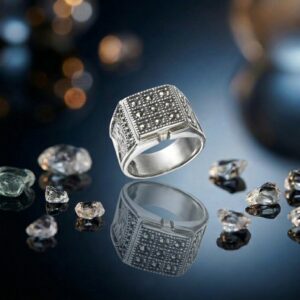
The signet ring is one of the most archetypal old money objects in existence. Originally used to seal documents with a personal mark, the signet ring carries millennia of association with family, identity, and inherited authority. Its contemporary resurgence — worn by men and women across demographics who connect with its heritage associations — is a direct expression of the old money aesthetic’s appetite for objects with genuine history.
A marcasite silver ring in a signet format — a flat, relatively wide face of densely set marcasite stones on a substantial band — translates the signet form into the marcasite tradition with complete authenticity. It reads immediately as a ring with weight and history. It wears with the quiet confidence of something that has been in the family.
The Art Deco Geometric Ring
The hexagonal cluster ring, the step-cut band, the chevron — Art Deco geometric forms are among the most consistently “old money” pieces in the vintage marcasite jewelry repertoire. Their precision communicates exactly the design intelligence that the aesthetic values: someone who chose this piece understood what they were choosing, and why.
The Art Deco ring is also the piece most likely to be examined closely and recognised by people with the visual literacy to appreciate it. “Is that Art Deco?” from a stranger across a table is the old money aesthetic achieving its purpose: being noticed by the right person for the right reason.
The Victorian Locket
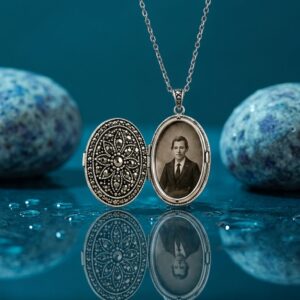
Of all the pieces in the antique silver jewelry tradition, the locket may be the most purely old money object. It is personal to the point of privacy — what it holds is known only to the wearer. It is historical in a way that no amount of styling can manufacture. It is functional as well as beautiful — it has a purpose beyond adornment. And it communicates a set of values — sentiment, memory, continuity — that are precisely the values the old money aesthetic celebrates.
A marcasite-set silver locket on a fine chain, worn close to the throat or at the collarbone, is the most complete expression of the old money jewelry aesthetic available in the Thai silver tradition. It does not announce itself. It rewards the person who looks closely enough to understand it.
The Simple Stud Earring with Density
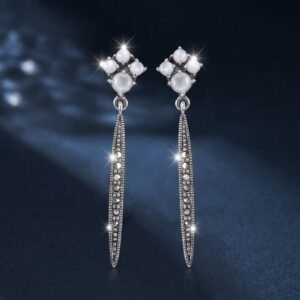
One of the most reliable signals of old money taste in earrings is a stud that appears simple at distance but reveals extraordinary complexity close up. A round marcasite pavé cluster stud — 10–12mm across, densely set, with the uniform dark sparkle of well-set stones against oxidised silver — reads as discreet from across the room. The person sitting beside you at dinner sees something else entirely: hundreds of individually placed stones, the microscopic precision of the setting, the depth of the oxidised silver behind.
This two-distance quality is quintessential old money. It is not trying to impress. It simply is.
The Single Pendant Necklace
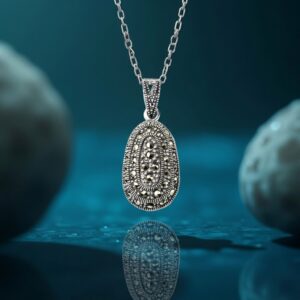
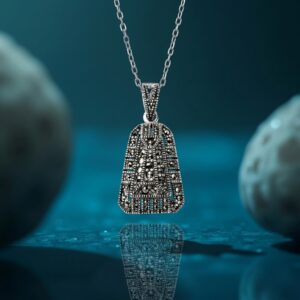
A single pendant on a fine chain — an Art Deco geometric form, a Victorian locket, a simple marcasite oval — worn at the base of the throat or slightly below is the old money necklace. One piece, perfectly chosen. No accumulation, no layering (unless the layering is as deliberate as everything else). The confidence to wear one thing and let it be enough.
The pendant should have enough visual complexity to reward attention but enough restraint to avoid demanding it. A hexagonal marcasite cluster pendant in a fine silver bezel, on a trace chain at 18 inches, achieves this balance almost perfectly.
How to Build an Old Money Jewelry Wardrobe
The old money aesthetic is not assembled in a single shopping session. It is built over time — each piece added with deliberation, worn until it feels like it has always been there, chosen because it adds something to the whole that nothing else could quite provide.
Begin with One Perfect Piece
The old money jewelry wardrobe begins with one piece that you love completely and unreservedly. Not a piece you think you should own. Not a piece that seemed like a good investment. A piece that stopped you when you saw it, that you kept coming back to, that you knew was yours before you could fully articulate why.
This piece becomes the reference point for everything that follows. Its aesthetic register — Art Deco or Victorian, geometric or organic, bold or dainty — establishes the direction of the collection.
Add Slowly and with Intention
Each subsequent piece should earn its place by doing something the existing collection does not. A different scale. A different historical reference. A different wearing context. The question to ask before any acquisition: does this add to what I already have, or does it simply repeat it?
Old money jewelry wardrobes are not large. They are edited. Thirty carefully chosen pieces are more powerful than three hundred accumulated ones, because they are all used, all known, all carrying their particular place in the composition.
Prioritise Craft Over Cost
The old money aesthetic is not about spending as much as possible. It is about spending on the right things — on materials and craft that justify the investment through quality, durability, and aesthetic substance.
A beautifully made piece of 925 silver jewelry from Thailand — hand-set by a skilled craftsperson, finished to a standard that reveals the maker’s mastery — is a better investment in old money terms than a much more expensive piece that communicates its cost without communicating craft. The old money customer is not paying for a price tag. They are paying for a piece that will look as beautiful in twenty years as it does today.
Wear the Pieces, Not the Aesthetic
The most important principle in building any authentic aesthetic is that the objects must be genuinely worn and genuinely loved. Old money jewelry that sits in a box and appears only for occasions is a costume. Old money jewelry that is worn regularly, that acquires the particular warmth of frequently-handled things, that becomes part of how you move through the world — that is the real thing.
Vintage marcasite jewelry from Hong Factory is made to be worn. The 925 sterling silver is robust. The hand-set stones, when properly maintained, stay secure through years of daily use. The oxidised finish improves with careful polishing over time, developing a warmth and depth that new pieces do not have. These are objects that become more beautiful with wearing — which is the only quality that truly matters for the old money aesthetic.
Styling the Old Money Silver Look
The Foundational Palette
The old money aesthetic in clothing is built on a palette that serves silver exceptionally well: navy, ivory, camel, deep grey, forest green, and black. These are colours that do not compete with the cool, complex tonal quality of oxidised Thai silver. They allow the jewelry to carry its own weight without fighting for attention.
Avoid bright, saturated colours with old money silver jewelry — they tip the register from understated to costume. The palette should feel as though it has been in someone’s wardrobe for a long time.
Fabric and Texture
Cashmere, linen, silk, fine wool, leather — the materials of the old money aesthetic share a quality that good clothing shares with good jewelry: they reward touch as well as sight. Running a hand across cashmere, like turning a marcasite ring in the light, reveals a quality that cannot be fully communicated in photographs.
Antique silver jewelry worn against quality fabrics creates a sensory coherence — everything in the look has been chosen for how it feels as well as how it looks — that is one of the subtler pleasures of the old money aesthetic.
Less Is the Practice
Old money styling with silver jewelry operates on consistent restraint. One hero piece of jewelry per outfit. Maximum three pieces in total. Plain or minimal clothing so the jewelry is seen clearly. The confidence to wear one extraordinary thing and nothing else.
This restraint is not natural for most people — it requires practice, and occasionally it requires leaving things behind that you want to wear. But the discipline produces something that accumulation does not: a look that appears entirely composed, in which every element has been chosen deliberately and knows its place.
Frequently Asked Questions
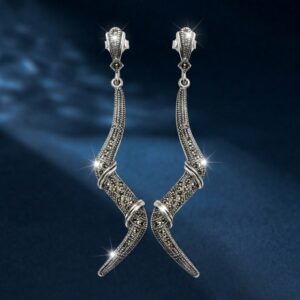
Is vintage marcasite jewelry appropriate for formal occasions? Completely. The Art Deco and Victorian traditions were developed specifically for formal and significant occasions. A beautifully made marcasite collar necklace or Victorian chandelier earrings are fully appropriate — and often more visually interesting — at formal events than conventional diamond alternatives.
How do I identify quality in antique silver jewelry and vintage-inspired marcasite pieces? Look for the 925 hallmark on every piece. Examine stone security — press each stone gently and confirm no movement. Check oxidation consistency — even, well-defined dark areas with clean contrast on polished surfaces. Look at clasp and fitting quality — these should operate smoothly with no visible tooling marks.
Does the old money aesthetic work at all ages and for all genders? Yes. The aesthetic’s core values — restraint, quality, historical depth, craft — are not age-specific or gender-specific. The specific pieces will vary: younger wearers may gravitate toward dainty stacking pieces and geometric rings, while more established wearers may prefer statement pendants and classic studs. But the underlying sensibility translates across demographics.
Can I mix marcasite with other jewelry I already own? Yes, thoughtfully. The old money aesthetic is not about wearing exclusively one type of jewelry — it is about combining pieces with the same aesthetic register. A vintage marcasite ring pairs naturally with a plain gold band (worn as a stack companion), a pearl stud earring (worn as a contrast to marcasite drops), or a simple watch with a leather strap. The test is whether the pieces feel like they belong to the same sensibility.
What is the minimum order for 925 silver jewelry from Hong Factory? Ready stock orders start from USD 1,000 with no per-design minimum. Made-to-order production starts from USD 2,000 with a minimum of 5 pieces per design and a 30–45 day lead time.
The Quiet Luxury of Thai Silver
Hong Factory has been producing antique silver jewelry and vintage marcasite jewelry in Bangkok since 1971 — longer than the old money aesthetic has had a name, and long before quiet luxury became a cultural moment. Our craft tradition, our design library of over 10,000 pieces, and our commitment to 925 sterling silver and hand-set quality are not responses to a trend. They are what we have always done.
For boutique owners building a range that speaks to customers who value taste over display — customers who are looking for jewelry with genuine historical depth, real craft quality, and the quiet authority of things that have existed long enough to be trusted — Hong Factory’s collection offers what very few wholesale suppliers can: the real thing.



Jewelry Blog
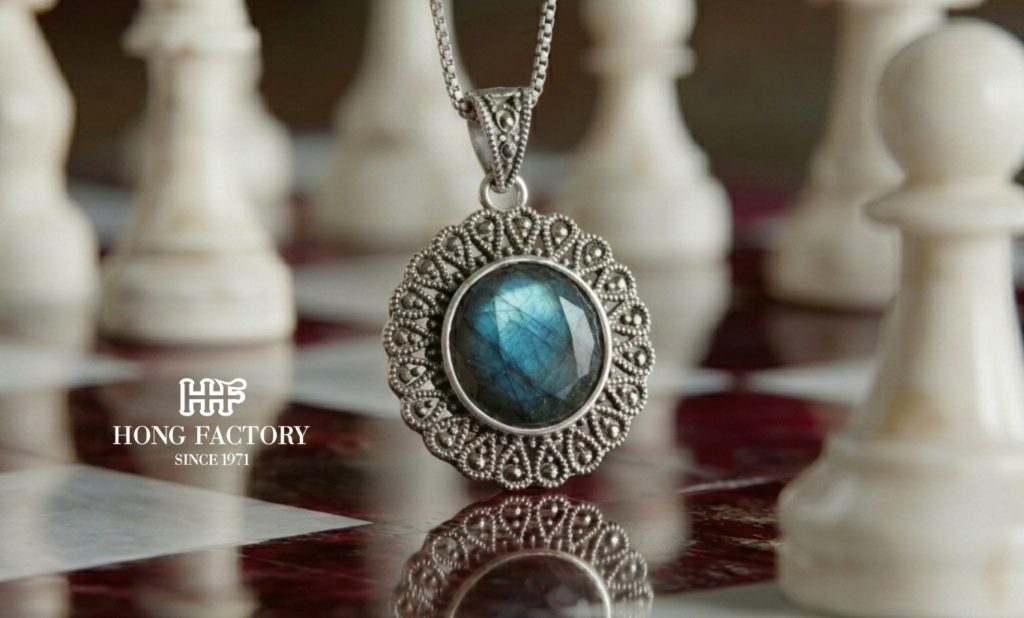
Coloured Gemstone Silver Jewelry: the Biggest Trend Hitting Boutiques in 2026
After years in which the dominant aesthetic conversation in [...]
Jun
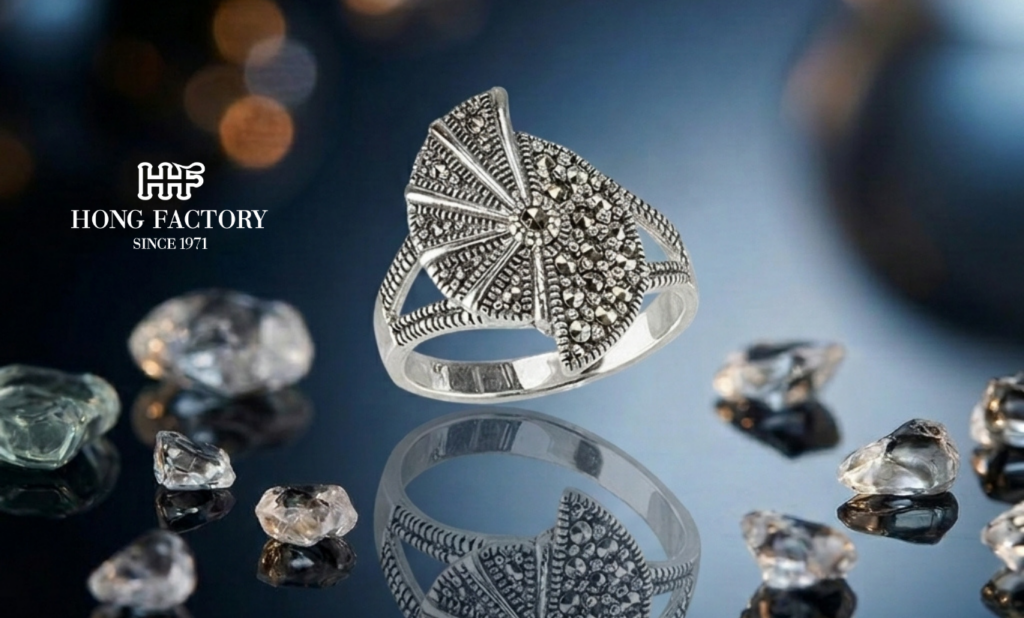
Art Deco Jewelry Is Back: Why the Geometric Silver Look Is Dominating 2026 Fashion
Walk the floors of any major jewelry trade show [...]
May
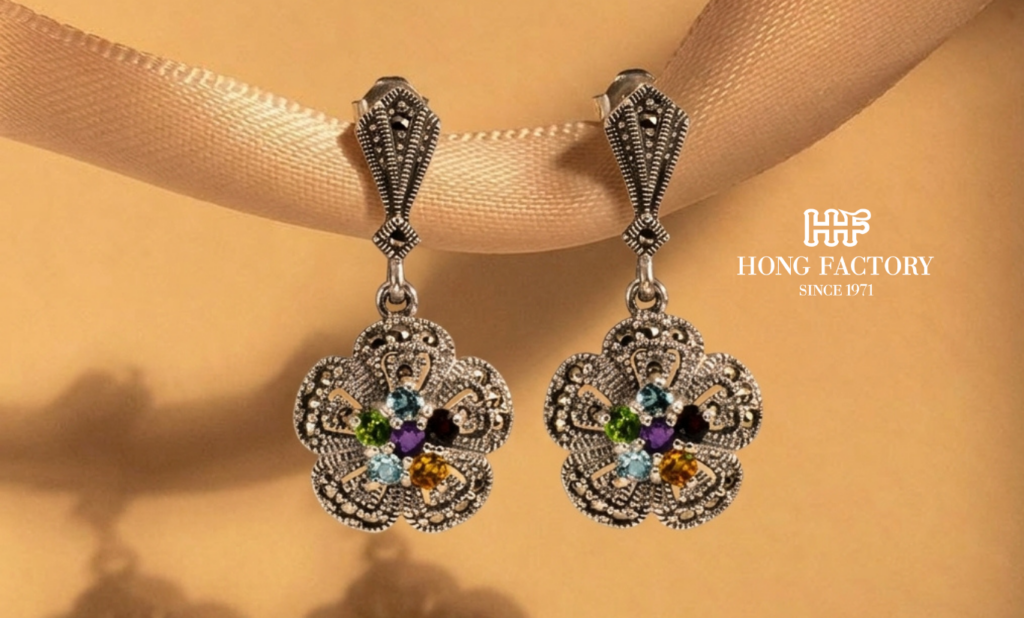
How to Style Marcasite Earrings: From Minimal Studs to Statement Drops
Rings are seen at close range. Necklaces are seen [...]
May
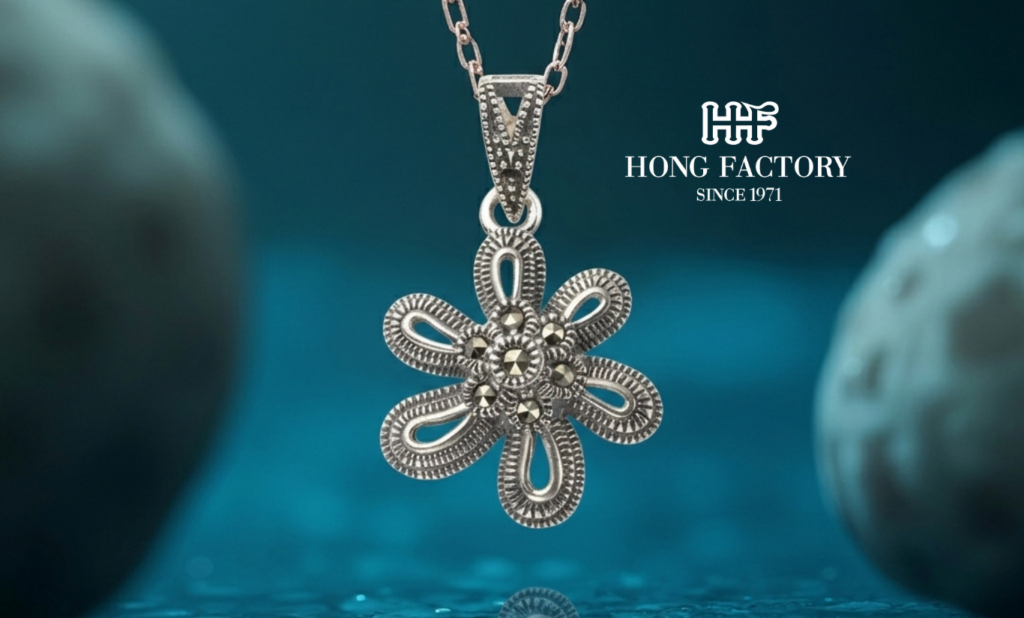
Old Money Aesthetic and Silver Jewelry: Why Marcasite Is the Quiet Luxury Choice
It is not because the pieces are large — [...]
May
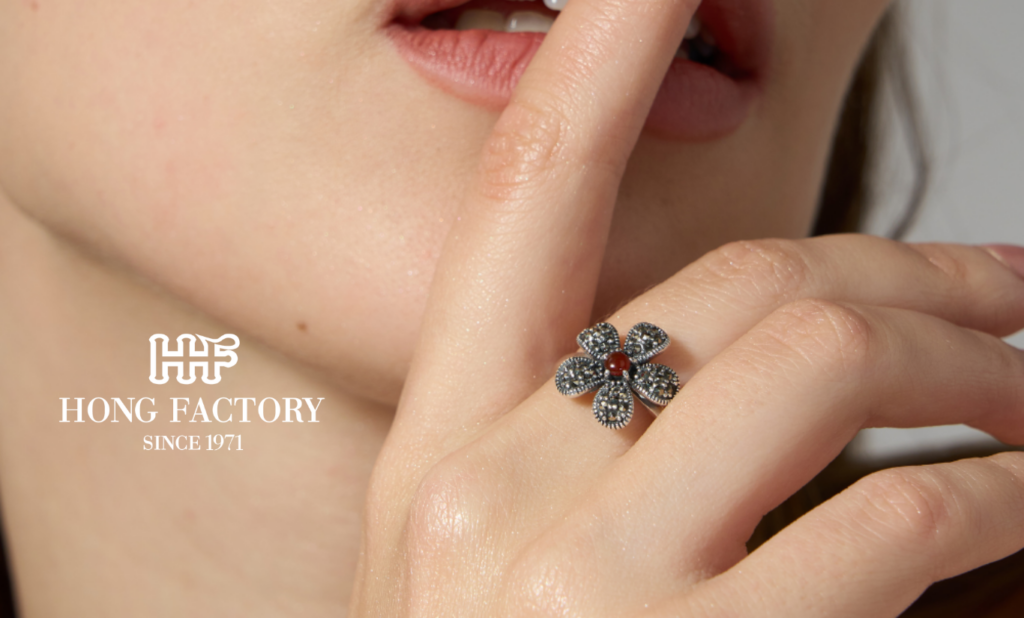
Silver Jewelry Outfit Pairing Guide: Which Pieces Work with Every Wardrobe
The most common jewelry mistake is not wearing the [...]
May
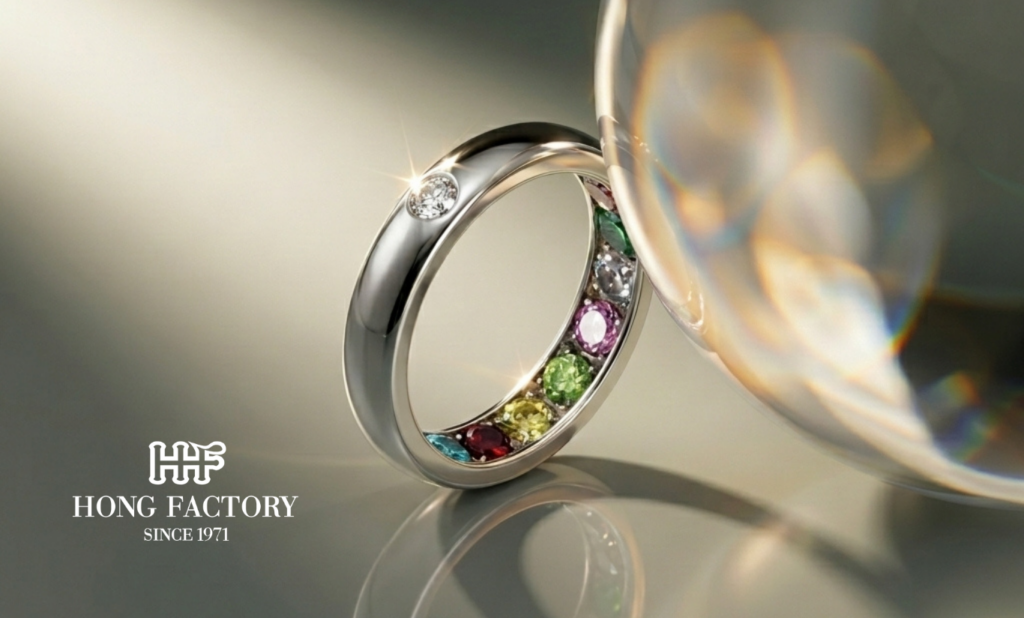
The Art of Stacking: How to Mix Marcasite Rings for Every Finger
There is a moment that every ring stacker knows. [...]
May
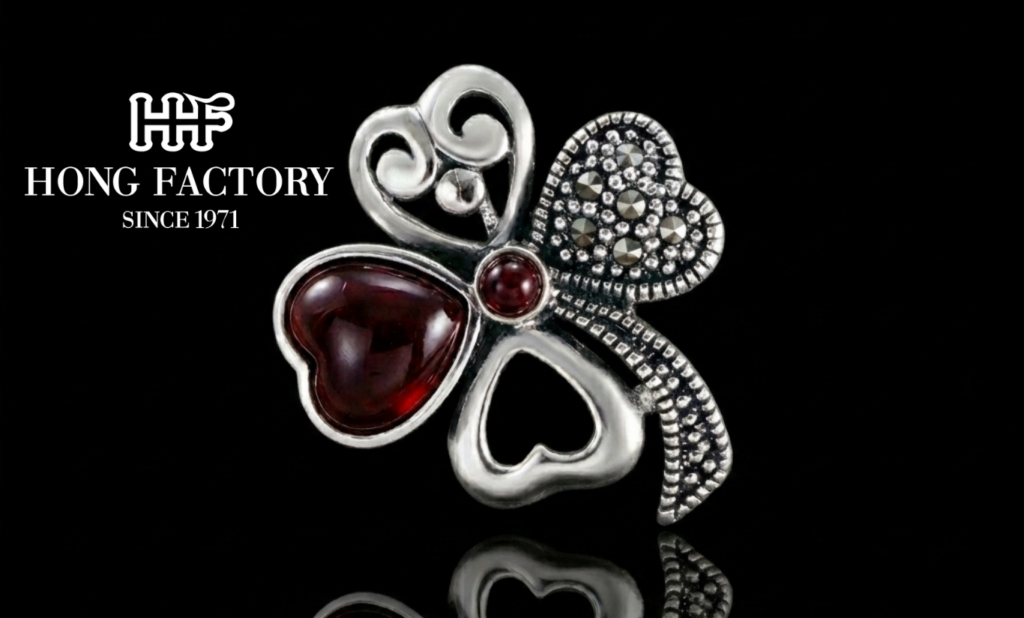
Vintage-Inspired Bridal Jewelry: Why More Brides Are Choosing Marcasite Over Diamonds
For decades, the bridal jewelry script was fixed: diamond [...]
May
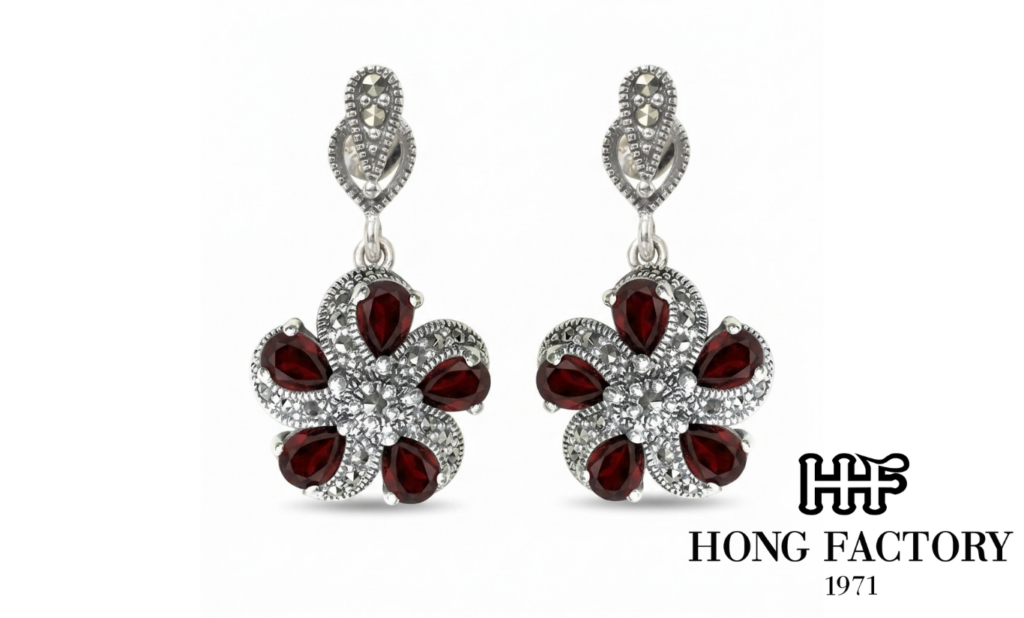
Top 10 Bestselling Marcasite Jewelry Designs from Hong Factory in 2026
Every season, our wholesale team tracks sell-through data from [...]
May